
Feeling unmotivated, disconnected, or not like yourself may all be signs that you’re in a temporary emotional funk.
If feelings of sadness last for more than two weeks and are accompanied by physical concerns, such as changes in appetite or sleep, it may be a more serious mental health condition that requires professional support.
Self-care, self-reflection, connection, and compassion are all tools to help kick a funk and get back to feeling your best.
When discussing mental health concerns, we often talk about anxiety, depression, or other diagnosable mental health conditions. Sometimes, however, you may just find yourself being in a funk — or what some people call an emotional funk. The good news is that funks are usually temporary and manageable.
How do you know if you’re in a funk?
Being in an emotional funk refers to a temporary state of feeling sad, down, or not like yourself. You might feel irritable, unmotivated, disconnected, or simply like life’s not going your way. These can be common symptoms of being in a funk. These are normal human emotions and most people experience an emotional funk at some point in life.
Funks can happen for all sorts of reasons, including:
Stress
Lack of sleep
Lack of exercise
Poor nutrition
Poor body image
Hormonal changes
Find your match
Take the first step toward better mental health.
Funk versus depression
Being in a funk is not a clinical diagnosis and is different from having a serious medical condition like depression. Here are a few notable differences between being in a funk and a clinical diagnosis of depression.
Duration: Funks typically last for a few days or weeks at most. To be diagnosed with depression, symptoms must persist for at least two weeks but usually last much longer.
Symptoms and severity: Both funks and depression can cause sadness and lack of motivation, but depressive symptoms are more severe and persistent. Being in a funk doesn’t usually cause physical symptoms, while depression can lead to changes in appetite, extreme fatigue, and headaches.
Cause: Funks often stem from specific events or stressors, while depression is caused by a combination of genetic, biological, environmental, and psychological factors.
Dig deeper:
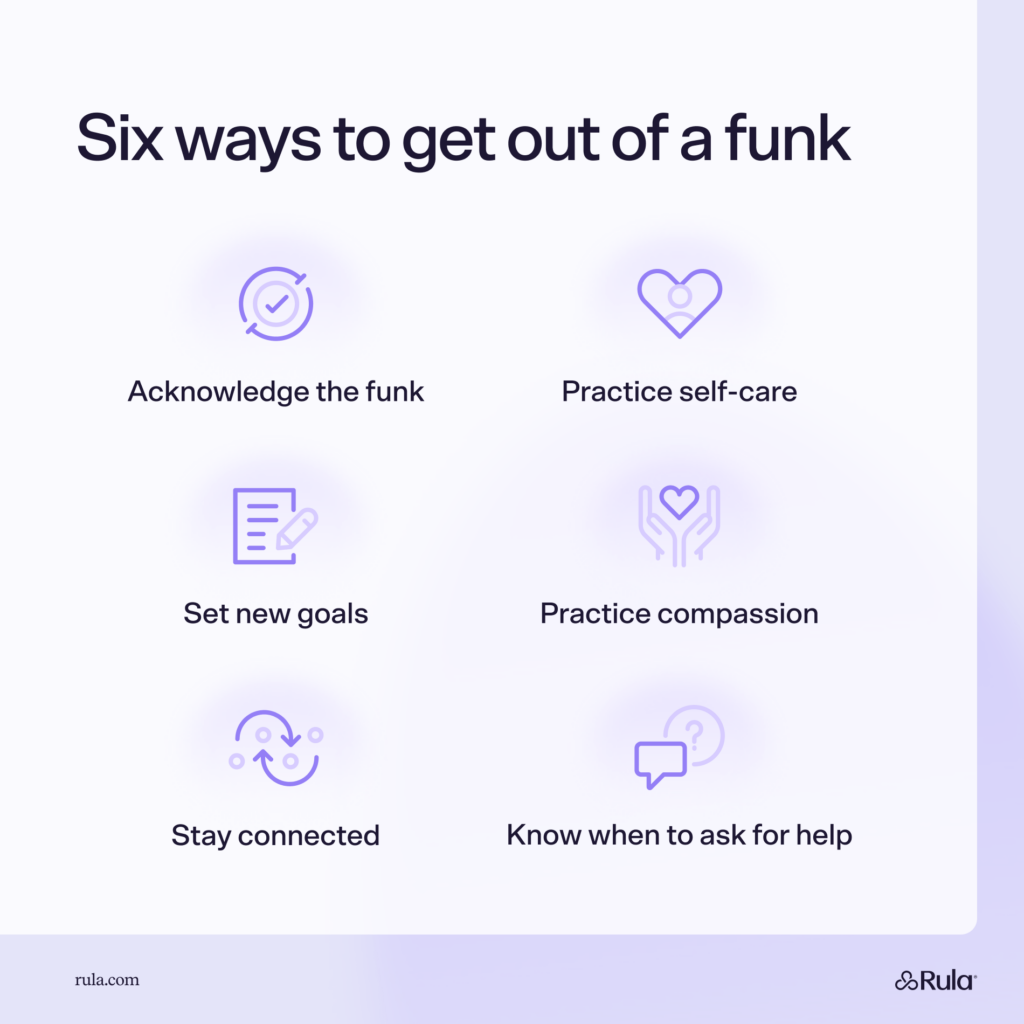
Six ways to get out of a funk
1. Acknowledge the funk
One of the first steps to getting out of a funk is acknowledging that you’re in one. If you’re not sure what’s causing your mood, ask yourself the following questions.
Am I getting enough sleep?
Am I eating a balanced diet?
Have my eating habits recently changed?
Are there any new stressors in my life like changes with finances, work, school, relationships, or health?
Has the weather recently changed?
From there, you can more proactively think about how to address your mood. For example:
How do I want to feel?
What can I focus on to help me feel the way I want to feel?
If this funk is linked to a specific issue, is there an action I can take to change it?
2. Practice self-care
Self-care is all about prioritizing habits and activities that help you live well and maintain your health. Regularly practicing self-care creates a strong foundation for managing stress, increasing energy, and lowering your risk of health issues. Self-care has been shown to help people during stressful times.
Quality sleep, regular exercise, and healthy foods are at the top of the list, but there are plenty of other self-care practices to help you feel your best. Self-care should be something you enjoy and may look a little different for everyone. Here are a few examples:
Meditation and mindfulness
Deep breathing exercises
Painting
Gardening
Dancing
Relaxing with a cup of tea
Hiking or walks for fresh air
Self-care also means limiting potentially harmful or addictive habits, like alcohol, caffeine, smoking, and excessive social media use.
3. Set new goals
Setting goals can be an effective way to maintain or improve your mental health. Goals allow you to focus on what’s important and can motivate you to get out of a rut and create positive change.
Setting goals starts with reflecting on where you are and what you’d like to achieve. Depending on what’s got you in a funk, you might want to find ways to manage stress, improve self-esteem or body image, or repair a struggling relationship.
Regardless of what you’d like to improve, your goals should always be S.M.A.R.T. (specific, measurable, attainable, relevant, and time-based). An example of a S.M.A.R.T. goal could be, “Listen to a meditation app for 15 minutes at bedtime for two weeks to see if it helps me wake up happier and more focused.”
And remember, it’s important to celebrate your goals and how they’ve positively impacted your life.
4. Practice compassion
Another idea for getting out of a funk is to be compassionate and kind to other people. Some research suggests that kindness can cause happiness, so consider finding ways to help others and spread joy. Here are a few ideas:
Volunteer for a local organization or charity
Send a friend or family member a handwritten note of appreciation
Remember to ask your coworkers about something important to them (like a hobby or their child’s sports team)
Say good morning to everyone you pass on your way to work or school
Offer to skill-share with a friend, like teaching an instrument or to learning how to cook
The care you need, when you need it
Learn how Rula can support your mental health journey
5. Stay connected
Being in a funk can make it difficult to find the motivation to spend time with others. However, research shows that social isolation can increase depressive symptoms and have an overall negative effect on health
Next time you’re feeling down, consider planning a night out with friends or grabbing coffee with a coworker. Even a phone call or text exchange with someone who brings you joy may be enough to turn your mood around.
If you don’t feel comfortable opening up to a friend or family member, consider connecting with others who are going through something similar. The National Alliance on Mental Illness (NAMI) offers various support group resources to help people connect with others and share their experiences.
6. Know when to ask for help
Finding yourself in a funk is sometimes part of life, but shouldn’t be confused with a serious mental health condition. If you’re struggling with unintentional changes in weight or appetite, recurring thoughts of suicide or self-harm*, or persistent sadness and low mood most of the day for more than two weeks, make an appointment with a mental health professional right away.
*If you or a loved one is experiencing suicidal thoughts or thoughts about harming themself or others, please call or text 988 on any phone for the Suicide & Crisis lifeline, contact a local crisis line, or head to the emergency room immediately. Any of these resources will ensure that the person in crisis receives support right away. For more information on getting help, go to 988lifeline.org
If experiencing a life-threatening emergency or you need immediate help, please call 911.
If you’re in a funk, start by validating your feelings instead of judging them. Then choose one form of gentle self-care that supports your nervous system, like movement, sunlight, hydration, or rest. Small steps done consistently are often what helps people feel like themselves again.

Brandy Chalmers, LPC
Clinical reviewer
Find care with Rula
It’s normal to feel down and unmotivated when you’re going through a funk. These feelings are usually temporary and can be managed with self-compassion, connection, and self-care.
But when symptoms last for longer than two weeks and include physical concerns, it may be time to speak with a mental health professional. In some cases, a funk is a sign of a serious mental health concern that requires professional support.
At Rula, we’re here to help you feel better. Rula makes it easy to find a licensed therapist or psychiatric provider who takes your insurance. That way, you don’t have to choose between great care and a price you can afford.
Rula patients pay about $15 per session with insurance, and 93% say they feel better after getting care through Rula. We have 21,000+ providers, and appointments are available as soon as tomorrow. We’re here to help you take the next step — wherever you are in your mental health journey.
Depression therapists near you
New York, NY – Houston, TX – Rancho Cucamonga, CA – Austin, TX – Chicago, IL – Los Angeles, CA – Columbus, OH – Portland, OR – Dallas, TX – Jacksonville, FL – Charlotte, NC – Denver, CO – Huntsville, AL – Philadelphia, PA – Seattle, WA – Find your city

Alex Bachert
Alex Bachert is a freelance copywriter and mental health advocate. Since earning her masters degree in public health, she has focused her career on creating informative content that empowers people to prioritize their health and well-being. Alex has partnered with organizations like Ro, WellTheory, and Firsthand, and her work has been recognized by the Digital Health Association.
When she’s not writing about mental health, Alex is usually playing pickleball, meeting with her local board of health, or enjoying time with her three kids.

Nick Frye, MS, LCPC
Nick Frye, MS, LCPC holds a Master’s degree in Counseling Psychology from Loyola University Maryland and is a Licensed Clinical Professional Counselor (LCPC) in Maryland. With experience as a substance use disorder counselor and a private practice therapist, he has worked with diverse populations, specializing in depression, anxiety, life transitions, and grief. Passionate about mental health, Nick transitioned from direct patient care to education and mentorship to support both early-career and seasoned professionals in their growth and development as clinicians.
Rula’s editorial process
Rula’s editorial team is on a mission to make science-backed mental health insights accessible and practical for every person seeking to better understand or improve mental wellness.
Members of Rula’s clinical leadership team and other expert providers contribute to all published content, offering guidance on themes and insights based on their firsthand experience in the field. Every piece of content is thoroughly reviewed by a clinician before publishing.