

It’s the end of a long week and you finally get to relax and kick your feet up as you enjoy your weekend. While two days away from work can feel rejuvenating, you can also become overwhelmed by the thought of the upcoming workweek. This feeling is known as the “Sunday scaries.”
While some people are able to take full advantage of their weekend without a single thought of Monday on the horizon, others start to feel dread, knowing they will soon return to work. At Rula, we understand this anticipatory anxiety and the impact it can have on someone. That’s why we set out to learn where Americans are most plagued by the Sunday scaries.
To do this, we surveyed residents in each state and asked a variety of questions about the emotional and physical symptoms they encounter when thinking about the upcoming workweek. We asked how often they feel this anxiety, when the feeling starts, how they cope with it, and more. Read on to learn more about our findings.
88% of Americans get the Sunday scaries.
Indiana, Florida, and Maryland residents are most plagued by the Sunday scaries.
Architecture, healthcare, and manufacturing workers are most plagued by the Sunday scaries.
Trouble sleeping, dread or unease, and anxiety are the most common symptoms of the Sunday scaries that Americans report.
Nearly one in five Americans who get the Sunday scaries say the scaries start to kick in on Saturday.
Watching TV or movies and spending time with family are top ways Americans cope with the Sunday scaries.
Where Americans struggle most with the Sunday scaries
If you find yourself dreading the upcoming workweek, you are not alone as we found that 88% of Americans get the Sunday scaries. For half of the country (47%), this pit in their stomach is felt most, if not every week.
So to learn which states are plagued most by the Sunday scaries, we asked respondents how often they experience them, if the feeling has gotten worse since last year, and more. We then awarded points to responses and calculated a Sunday scaries score on a scale of 0 to 100, with 100 representing the most experience with the Sunday scaries.
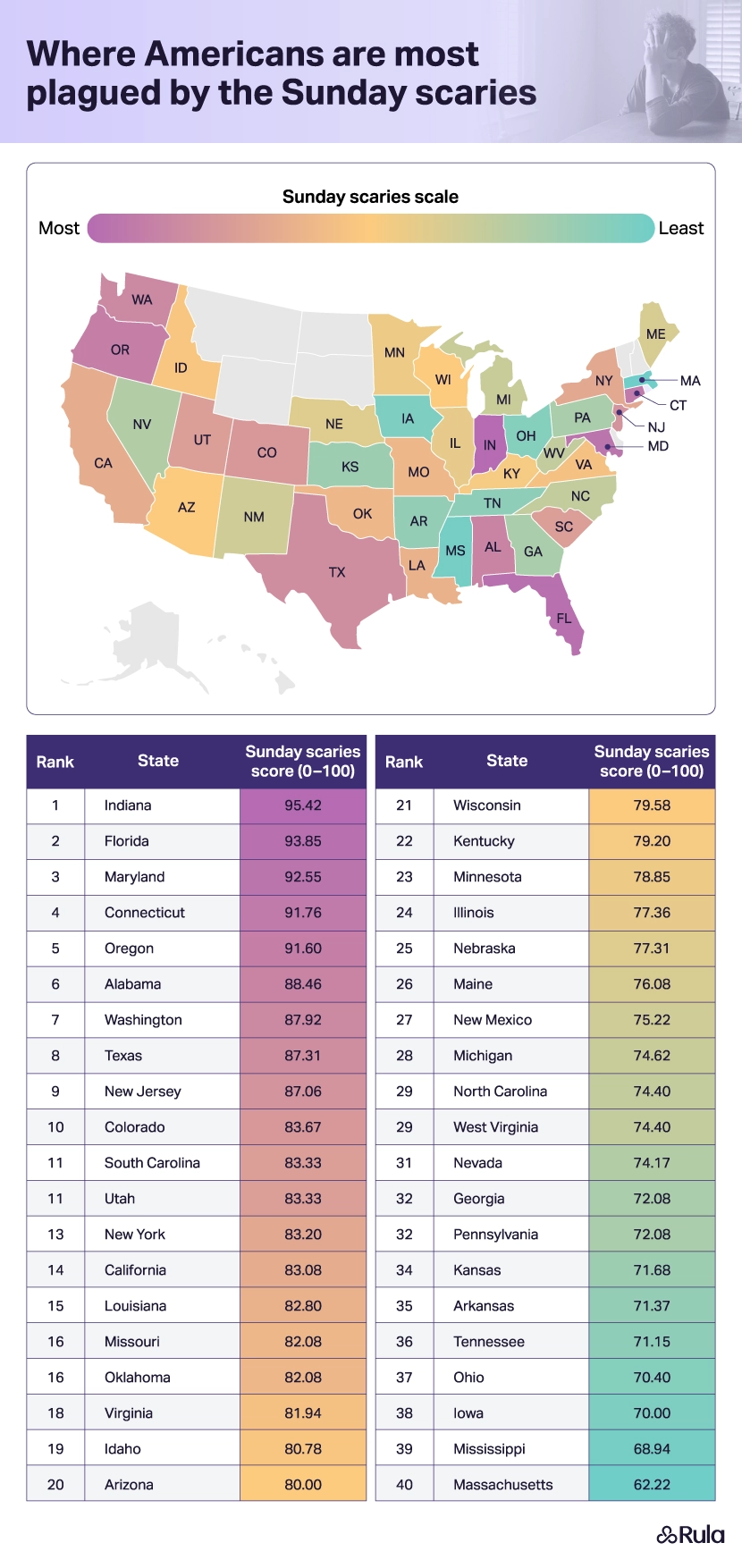 Leading the way with a score of 95.42 is Indiana as we discovered residents of the state are most likely to frequently experience physical symptoms of anxiety before starting a new workweek. This includes things like headaches, trouble sleeping, and more.
Florida is up next, following closely behind with a Sunday scaries score of 93.85 out of 100. While some people feel dread for the upcoming workweek no matter what, others attribute the feeling to their unhappiness at their job. Overall, we found Florida and Alabama residents tied for the most likely to think they would dread Mondays less if they were happier at their job and are actively searching for a new job.
Coming in third place is Maryland with a score of 92.55 out of 100 as 57% of residents say they frequently feel dread ahead of Mondays. Connecticut (91.76) is up next, claiming fourth place as residents of the state are the most likely to say their Sunday scaries have gotten worse in the past year. This is followed by Oregon (91.60), Alabama (88.46), and Washington (87.92) in fifth, sixth, and seventh place, respectively.
In addition to the states most plagued by the Sunday scaries, we wanted to learn which career industries dread Mondays most as well. Up first are those in the healthcare industry with a score of 96.61 out of 100. For some, Sunday scaries are the result of feeling like you ran out of time to get things done before returning to work. Perhaps this contributes to the industry’s ranking as nearly three in four healthcare workers report not feeling as though they accomplish everything they want in a typical weekend.
Up next is the manufacturing industry with a score of 93.51 as workers are the second most likely to report their Sunday scaries have gotten worse in the past year, only behind the science and research industry. Rounding out the top three industries is telecommunications with a score of 93.33 out of 100. Overall, we found workers in this industry are most likely to say they are unhappy in their current role and are currently searching for a new job.
Most common Sunday scaries symptoms
When you think of the Sunday scaries, you are likely to think about the headache that starts to form late Sunday evening or maybe the stomachache at the thought of your workload for next week. While these are very real symptoms, many people experience both physical and emotional symptoms.
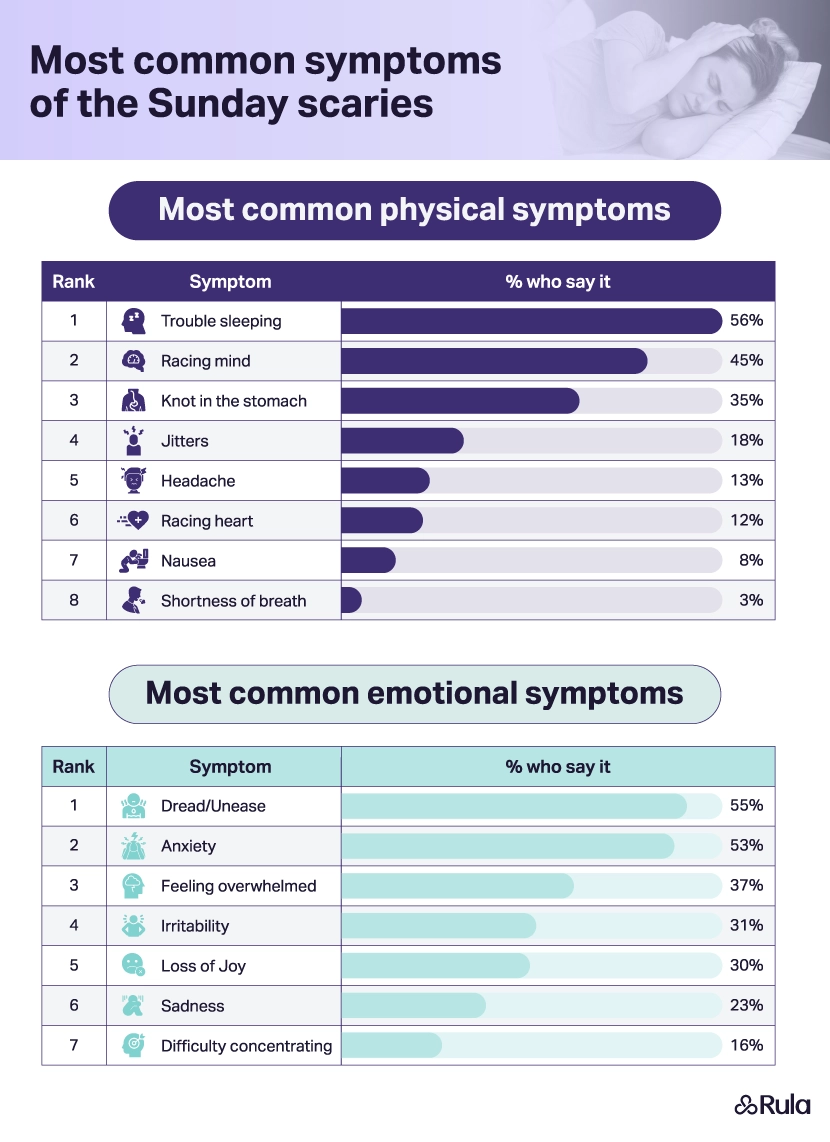 That’s why we asked about both types to learn which symptoms are plaguing Americans most. First for physical symptoms is trouble sleeping, which 56% of the country reports. This is followed by a racing mind (45%). Combined, these two symptoms are sure to keep anyone from feeling well rested on a Monday.
For more than a third of Americans, the Sunday scaries presents itself as a knot in their stomach. This is followed by jitters (18%), headaches (13%), and a racing heart (12%) ranking fourth, fifth, and sixth place, respectively.
Moving on to emotional symptoms of Sunday scaries we find dread or unease leads the way with 55% of people reporting it. For 53% of Americans, the thought of the upcoming workweek is accompanied by anxiety. In third place is feeling overwhelmed (37%), followed by irritability (31%) in fourth place.
How Americans cope with the Sunday scaries
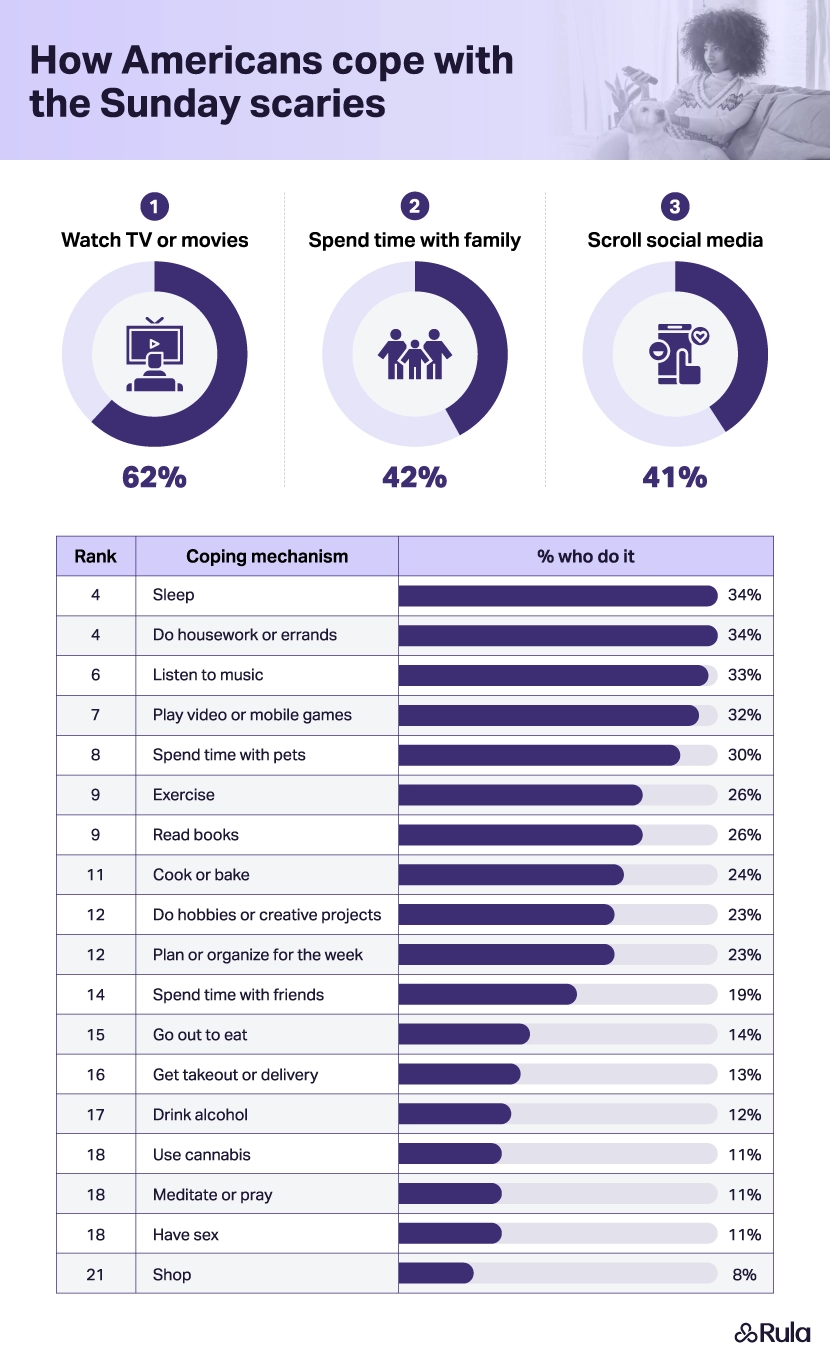 As most of the country struggles with the occasional case of the Sunday scaries, we wanted to dive into the methods used to combat this anticipatory anxiety. Overall, we found that simply watching TV or movies (62%) is the most common activity Americans use as a way to relax on Sundays and avoid feelings of dread.
Whether you have a favorite comfort show you enjoy binging or are an avid movie fan always searching for a new flick to watch, this form of entertainment is a great way to distract your mind and allow yourself to unwind.
Up next for coping mechanisms is spending time with family as 42% of people report this as a way to relieve stress and anxiety on Sundays. This is followed by scrolling social media, which is how more than two-fifth of Americans say they spend their Sundays.
Whether you work a typical workday or an early morning or late-night shift, sleep is crucial, which may be why 34% of people use their Sundays to catch up on sleep. While making up for time lost in the land of nod ranks as the fourth most popular coping mechanism for Sunday scaries, it ties with housework and errands as many people use time away from work to catch up on things they want done at home.
While there may not be an instant cure for the Sunday scaries, you can find many methods available to help combat the feeling. If you find yourself struggling to find the right activity to calm your mind ahead of the workweek, check out our guide on the psychology of overcoming Sunday scaries.
Find your match
Take the first step toward better mental health.
Combat Sunday scaries with Rula
While some Americans point to their level of happiness at a job as a source of their Sunday scaries, not all cases of this particular anxiety can be avoided by a change in career, but you have alternatives for coping.
At Rula, we pride ourselves on personalized care and good mental health. So whether you are just starting your mental health journey or you are looking for the right expert to help you tackle your Sunday scaries, we are here to help.
First, we’ll ask a few basic questions about your goals and insurance and then using that information, we will match you with a therapist that best fits your needs. Get started today and get back to enjoying every minute of your weekend.
Methodology
In this study, we set out to learn where Americans are most plagued by the Sunday scaries and how they cope with the feeling. To do this, we surveyed residents in every state about their feelings ahead of the start of a new workweek. We asked a variety of questions from how often they feel dread, what physical and emotional symptoms they experience, when the Sunday scaries kick in, how they cope, and more.
Using these responses, we awarded points to answers that represented the Sunday scaries and calculated the average by state. Finally, we adjusted those scores on a scale of 0 to 100, with 100 representing the most frequent feelings of the Sunday scaries.

Rula Health
Rula’s editorial process
Rula’s editorial team is on a mission to make science-backed mental health insights accessible and practical for every person seeking to better understand or improve mental wellness.
Members of Rula’s clinical leadership team and other expert providers contribute to all published content, offering guidance on themes and insights based on their firsthand experience in the field. Every piece of content is thoroughly reviewed by a clinician before publishing.