Key Takeaways
Americans assume California, Colorado, and Texas are thriving most.
Economic resources and community and family safety are the two factors people say best define "thriving."
Lower care costs and healthy food access and affordability are the most common things people say their state should invest in.
Good health is about more than regular checkups with your primary care doctor or achieving a certain daily step count. But if you asked the average person which states are thriving the most, odds are their answer won’t match the facts because in the U.S., health is shaped by additional elements, including income, housing, environment, and more.
Rula strives to help everyone achieve a healthier, happier version of themselves, and after analyzing the 2024 America’s Health Rankings (AHR) Annual Report, the next step was to determine how this ranking compares with Americans’ perceptions. To find out, we surveyed residents in each state and asked them to consider where in the U.S. people are physically and mentally healthy. We also asked them to consider access to social support, good quality of life, high-quality healthcare and education, economic security, safe communities, and healthy environments.
Then after setting a definition of a “thriving” state, we asked respondents to rank the top states they think are thriving most and the states they think are thriving least. We then calculated the percent of mentions for each state and created two rankings, one for states Americans think are thriving most and one for states Americans think are thriving least.
To check perceptions versus reality, we then compared the rankings from the AHR Annual Report and our most thriving states ranking to see which states are most over and underrated. Read on to learn more about our findings.
States Americans overrated and underrated on quality of life
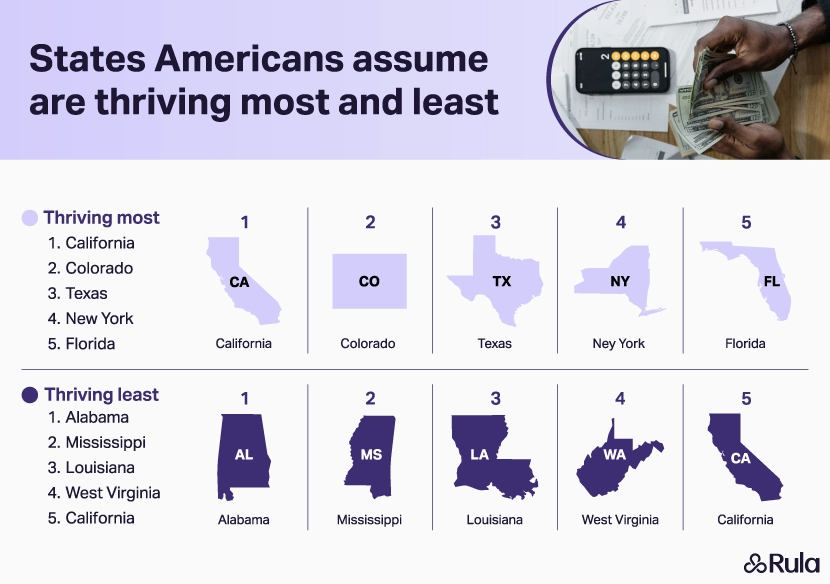 From appearances on social media and TV to opinions shared by friends who have visited the area, many aspects of life can shape our opinions of other places. When deciding which states Americans consider to be thriving the most, we found that news media and having friends or family who live there were the biggest influences on respondents’ choices.
With these views in mind, California was ranked the number one thriving state according to Americans. When compared to the AHR Annual Report, this doesn’t quite match up, however, as California ranks 26th overall. While each state is ranked on a variety of factors, the report outlines that California has seen a 138% increase in drug deaths between 2013 and 2022 and a 32% increase in residents’ frequent mental distress during that same time period. Both of these, along with other factors, are elements that play a role in the state’s ranking.
Up next for perceived thriving states is Colorado, which ranks tenth on the AHR Annual Report. Although a bit lower on the ranking than Americans believe, the report shared that there has been a 35% decrease in adults smoking habits and 19% decrease in poverty in recent years.
In third place for thriving states according to Americans is Texas, which tops our list as the most overrated state in the country with a -37 rank differential between perception and reality. Ranked 40th on the annual report, data found a 61% increase in residents’ frequent mental distress. Another factor contributing to this ranking is a 21% increase in food insecurity between 2013 and 2022.
On the other end of the spectrum, Americans ranked North Dakota 42nd for thriving states, but the AHR Annual Report shows the state is doing much better than the average person might suspect. Ranking 14th in the annual report, North Dakota saw a 44% decrease in uninsured residents and a 43% decrease in occupational fatalities.
Similarly, South Dakota was the second most underrated state behind its northern neighbor as Americans ranked it 47th for thriving most. With a rank differential of 25, South Dakota ranked 22nd on the annual report with a 17% increase in high-speed internet contributing to the ranking.
Inside Americans’ definition of thriving
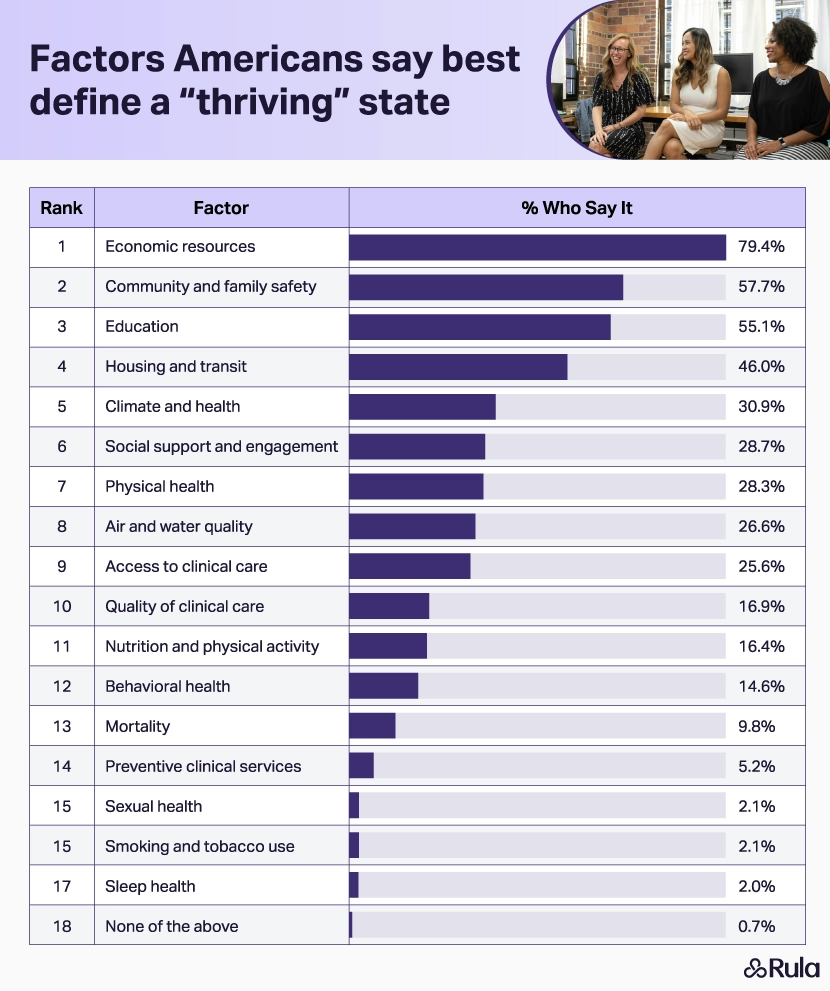 After learning about Americans’ overall perceptions of states, we wanted to understand what factors they use to best define a “thriving” state. Leading the way with 79% of respondents noting it are economic resources. In the annual report, this includes an economic hardship index, food insecurity, and income inequality.
Community and family safety are up next as the second most popular factor (58%). In the report, this category is made up by homicides, occupational fatalities, and public health funding. This is followed by education, which 55% of Americans consider to be the best way to define a thriving state. With schools shaping the minds of younger generations, it is understandable that more than half of Americans view this as an important factor.
In addition to factors respondents think best define thriving, we also asked how they feel their state fairs when compared to other states on a variety of factors. First, we asked Americans about social and economic health, which includes public health funding, food insecurity, high school completion, and more.
While 31% of Americans think their state is doing better than others, 35% think it’s doing worse. Overall, we found that Massachusetts, Minnesota, and California residents are the most likely to think their state is doing better than others in this category.
Up next is physical environment, which includes air pollution, climate policies, and severe housing problems. Across all categories asked about, physical environment had the highest percentage of respondents reporting they think their state is doing better than others (36%). When looking on a state-by-state level, Maine, Idaho, and Minnesota residents are most likely to praise their state’s efforts.
For clinical care by state, we asked respondents to consider things like mental health providers, childhood immunizations, and preventable hospitalizations. With these factors in mind, 33% felt their state is thriving more than others in this regard.
How Americans think states should spend to get healthier
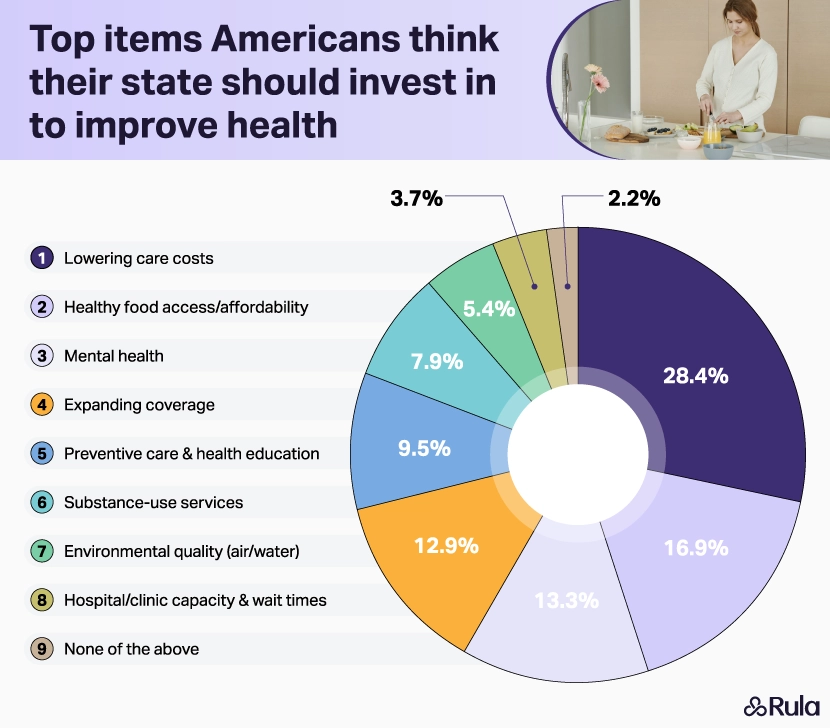 While change takes time, we wanted to gain insight into the areas of health and wellness Americans think their state should invest in to get healthier. Leading the way with nearly a third of people reporting it is lowering care costs. By improving affordability, states would ultimately increase accessibility and as a result outcomes, allowing residents to seek treatment when needed.
In second place, we found 17% of Americans feel their state should focus its spending on healthy food access and affordability. Similar to the lowering of care costs, this shift would make it easier for residents to choose healthier, fresh options as opposed to unhealthy, processed foods. Access to healthy foods also plays a role in health as eating healthier can lower risk of heart disease, diabetes, and more.
For one in seven respondents, a focus on mental health is most important to them. Outside of simply helping residents’ with their health, a focus on mental health care can improve overall public health, create a more productive workforce, and more. Rounding out the top five areas of focus Americans think their state should invest in are expanding coverage for healthcare (13%) and preventive care and health education (10%) in fourth and fifth place, respectively.
Helping people thrive wherever they live
No matter if your state is truly thriving or has good access to healthcare, you can still ensure you’re thriving mentally. At Rula, we specialize in connecting those in need with the mental health expert that fits them best.
By answering a few simple questions, we provide a list of specialists close to you that fit your type of care and accept your insurance. Get started today with online therapy and take the guesswork out of finding the right provider, so you can focus on taking the first step toward better mental health.
Methodology
In this study, we set out to learn which states Americans think are thriving most and least and compare those perceptions to the 2024 America’s Health Rankings Annual Report (AHR Annual Report). To do this, we surveyed Americans in each state and first explained that thriving means people are physically and mentally healthy and have social support and a good quality of life, which means high-quality healthcare and education, economic security, safe communities, and healthy environments. We then asked respondents to select up to seven states they felt matched this description. We then asked respondents to select up to seven states they felt fell short and were thriving the least.
Using these responses, we then calculated a percent of mentions for each state and ranked both the most thriving states and least thriving states. Then we subtracted the rankings for the states Americans think are thriving most from our survey by the state rankings in the AHR Annual Report to create a rank differential. We then ranked states from most overrated to most underrated, showing where Americans think states are doing better or worse than they actually are.
In addition to our comparison, we also asked what sources influence respondents' opinions of states, which factors they think best define a thriving state, top items people think their state should invest in to improve health, and more.