Rula Care Kit for Suicide Prevention
Suicide prevention begins with awareness and support. The Rula Care Kit offers tools to recognize risks, identify warning signs, connect people with help, and reduce stigma.

Signs that may indicate an elevated risk for suicide
Knowledge is a powerful tool for suicide prevention. Learn to recognize signs of crisis and spot someone at risk.

Know the signs
– Killing or harming themselves
– Feeling hopeless
– Having no reason to live
– Being a burden to others
– Feeling trapped
– Unbearable pain
– Increased use of alcohol or drugs
– Looking for a way to end their lives, like searching online for methods
– Withdrawing from activities
– Isolating from family and friends
– Sleeping too much or too little
– Visiting or calling people to say goodbye
– Giving away prized possessions
– Increased aggression
– Increased fatigue
– Depression
– Anxiety
– Loss of interest
– Irritability
– Humiliation/Shame
– Agitation/Anger
– Relief/Sudden improvement
Crisis resources for suicide prevention
If you or someone you know is experiencing a suicidal crisis, don't wait — contact these 24/7 crisis resources for help.
Having tough conversations
How to talk with someone who might be considering suicide



An open, compassionate conversation can provide relief and create a path to help.
Don’t be afraid to mention suicide explicitly — for example, “Are you thinking about suicide?” Research shows that asking directly can make it easier for someone to open up.
Be present, patient, and focused on what they have to say.
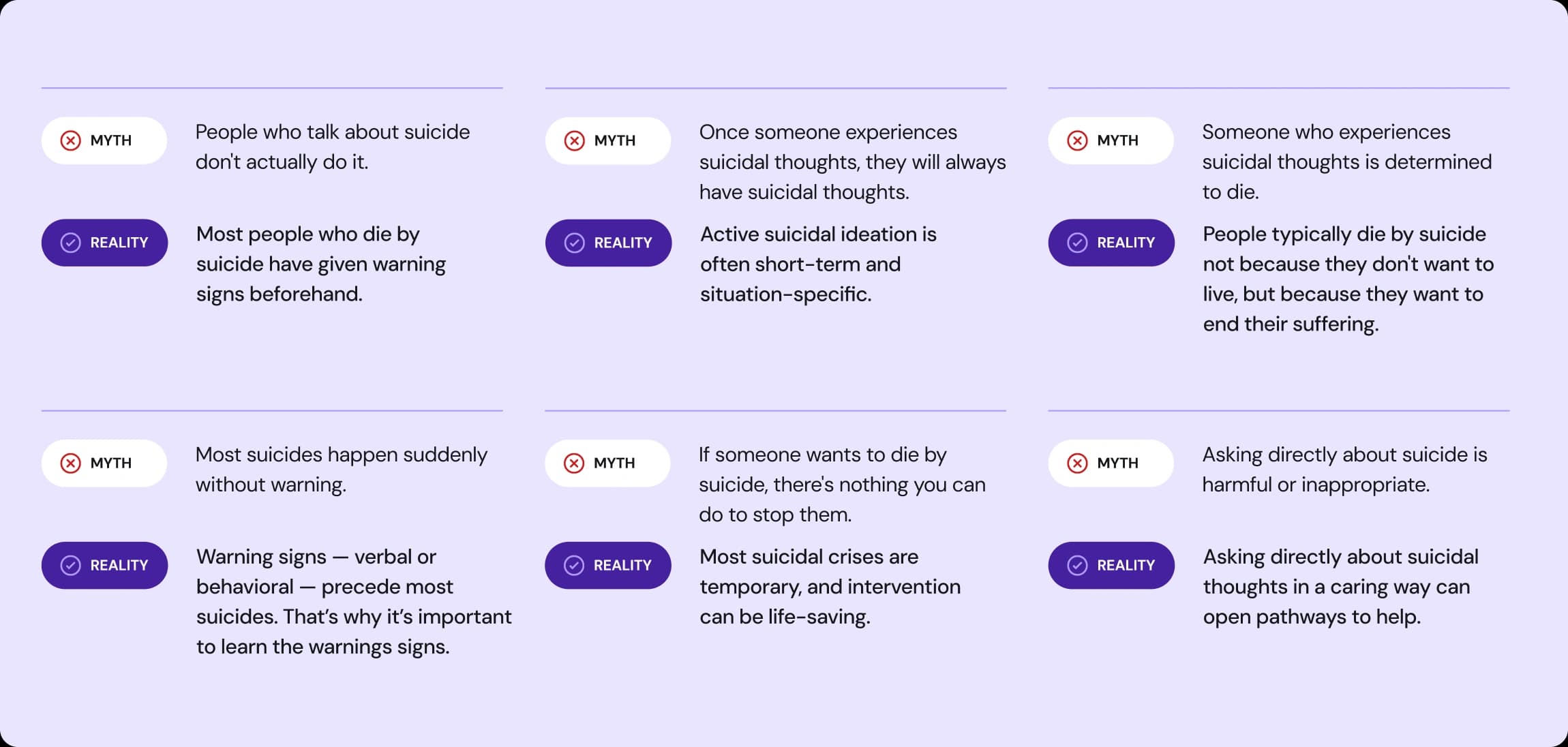
While social stigma about suicide means that open conversations on the topic are rare, the reality is that suicide is a leading cause of death in the United States. In 2023, over 49,000 people died by suicide. That amounts to about one death every 11 minutes.
Despite its prevalence, there are many misconceptions out there. So we’re debunking some common myths related to suicide. Learning the facts can help you spot the warning signs, challenge stigma, and potentially save a life.
Recognizing suicide risk factors
Recognizing suicide risk factors can help you act early by checking in, watching for warning signs, reducing access to lethal means, and connecting your loved one with support.

Suicide Risk Factors
Someone who has previously attempted suicide has a greater risk of attempting in the future.
People living with chronic pain are at least twice as likely to report suicidal behaviors.
Suicide is a leading cause of death among people who misuse drugs and alcohol.
People who have experienced the loss of a family member to suicide may face a higher risk of suicidal thoughts or behaviors.
People who have undergone traumatic experiences like abuse, neglect, or the loss of a job or close relationship are more likely to consider suicide.
Loneliness, social isolation, and lack of community support systems can increase vulnerability to suicide.
Depression, anxiety, and other medical conditions can put people at greater risk for suicide.
Easy access to firearms, medications, or other potential lethal means significantly increases the risk of suicide.
Specific groups at risk
Specific groups at risk
People in vulnerable populations or experiencing challenging life circumstances can have a higher risk for suicide. Keep an eye out for suicide warning signs for people in the following groups:
Teens: Academic changes, social withdrawal, risky behaviors →
Postpartum parents: Understanding risk and strengthening support during pregnancy and postpartum →
Older adults: Health decline, loss-related depression, social isolation →
LGBTQ+: Identity-related stressors, discrimination impacts, family rejection signs →

From our blog
More information on preventing suicide
Coping after suicide loss
There’s no “right” way to grieve, but support and understanding can make a real difference. Here are some key ways to care for yourself after a suicide loss:
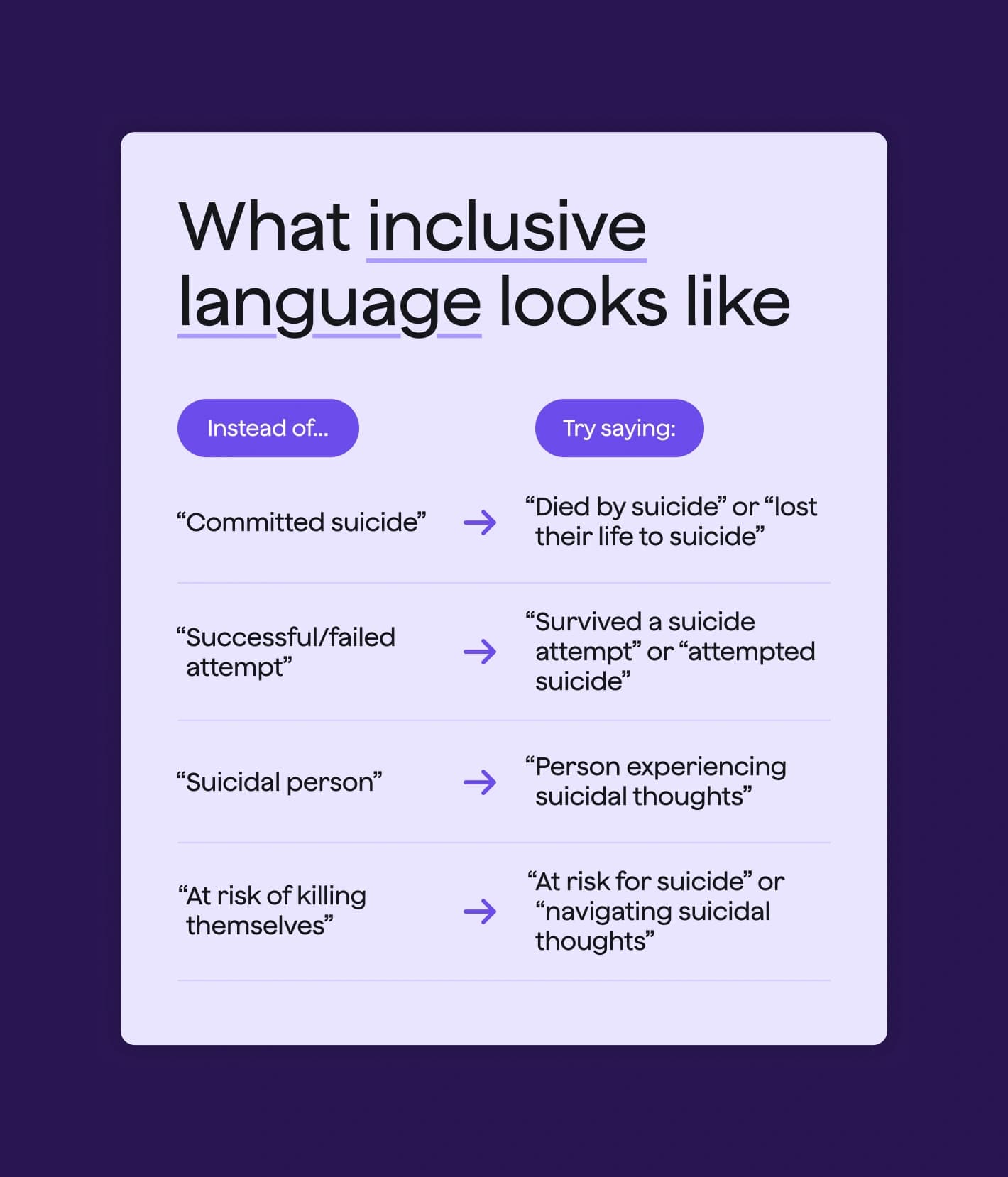
The language we use to talk about suicide matters
The language we use to talk about suicide matters
Suicide prevention starts with compassion, and that includes the language we use. Suicide has historically been surrounded by stigma and misunderstanding, which can cause further harm to people who are already in emotional pain. The words we use to talk about suicide can either reinforce shame and silence, or help create space for openness and support.
By carefully choosing our affirming words, we foster a culture where people feel safe to speak, supported in seeking care, and respected in their experiences.


© 2025 Rula Health. All rights reserved.