What starts as an exciting night out with friends catching up and enjoying a few drinks can quickly turn into an overwhelming morning. From feeling anxious to overthinking conversations, hangxiety, the dread or worry you experience after drinking, has plagued many Americans after a fun night out.
At Rula, we work closely with mental health experts and recognize that hangxiety is often more than just a temporary feeling. That’s why we set out to learn just how widespread and impactful it is for Americans. To do this, we surveyed people across the country who typically consume at least one alcoholic beverage each week.
We then asked a variety of questions about how they feel the morning after a night of drinking. Questions focused on the emotional impacts, worries people have, changes they’ve made due to these feelings, coping mechanisms, and more. Read on to learn more about our findings.
One in four Americans experience anxiety or negative emotions the day after drinking alcohol.
Americans are most likely to worry about something they said in conversation the morning after drinking.
Nearly a third of Americans say the emotional effects they experience after drinking are worse than the physical hangover.
55% of Americans have changed their drinking habits because of anxiety or negative emotions the next day.
69% of Americans have checked their phone, texts, or social media the next morning out of concern about something they posted or said while drinking.
Nearly one in two Americans have sent a text message while drinking and later regretted it.
Most common hangxiety emotions
Waking up the morning after drinking isn’t always plagued by a headache or nauseous feeling. For some people, the emotions they wake up with might be even worse. In fact, when asked to compare the feelings of hangxiety compared to a typical hangover, we found nearly a third of Americans say the emotional effects are worse than the physical.
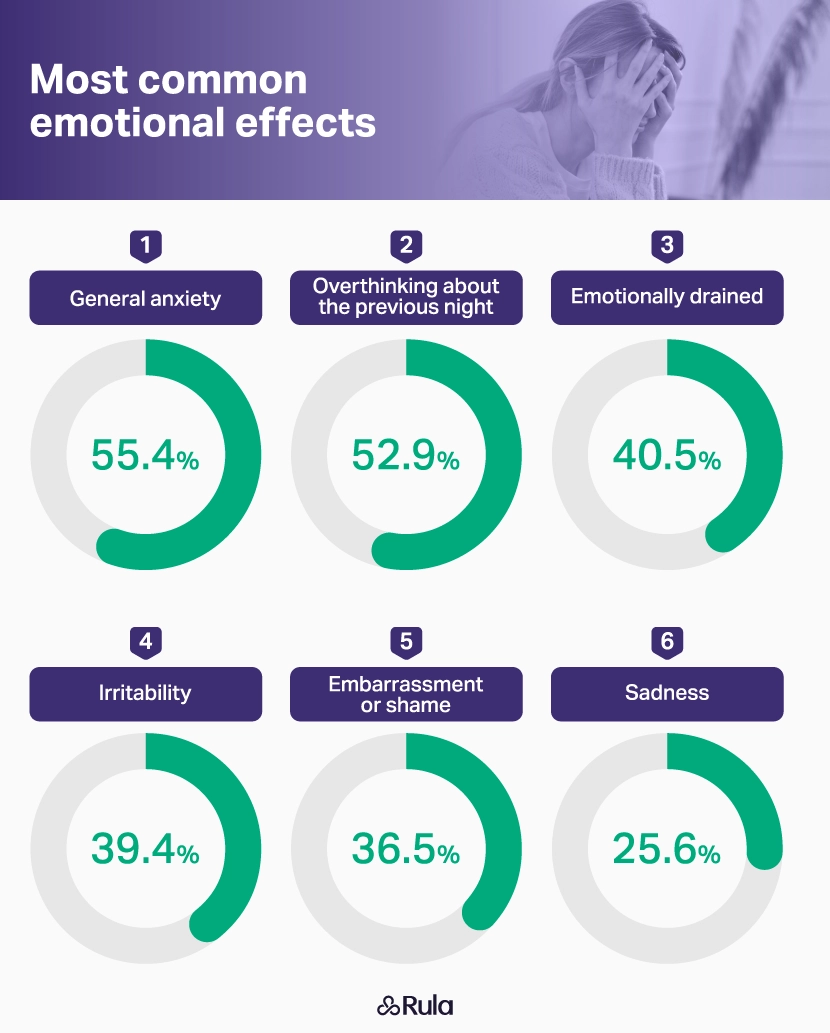 Leading the way as the most common emotion experienced after a night of drinking is general anxiety, which 55% of people report. According to the American Addiction Centers, drinking results in three factors that can lead to hangxiety: increased cortisol levels, decreases in gamma-aminobutyric acid (GABA) in the brain, and increased heart rate.
This shows that, while some people experience hangxiety as a result of preexisting mental health conditions, those without these conditions can still experience intense feelings of dread and worry simply due to consuming alcohol.
Coming in second place for common hangxiety emotions is overthinking about the previous night (53%). Overthinking in any situation can be harmful for our mental health, but when alcohol enters the picture, these feelings can be intensified, prolonging anxiety, stress, and overall mental exhaustion.
Up next in third place, with more than two-fifths of Americans reporting it, is feeling emotionally drained. This symptom of hangxiety can impact more than just our mind, however, as feeling emotionally drained can lead to physical fatigue, lack of motivation, and more. This is followed by irritability (39%), embarrassment or shame (37%), and sadness (26%).
Top morning-after worries associated with hangxiety
As our data shows, Americans experience many negative emotions after a night of drinking. While many are the result of alcohol’s impacts on their body and mind, some are caused by their actions while they were intoxicated. That’s why, in addition to the emotions experienced, we also asked respondents about the worries they wake up with after a night of drinking.
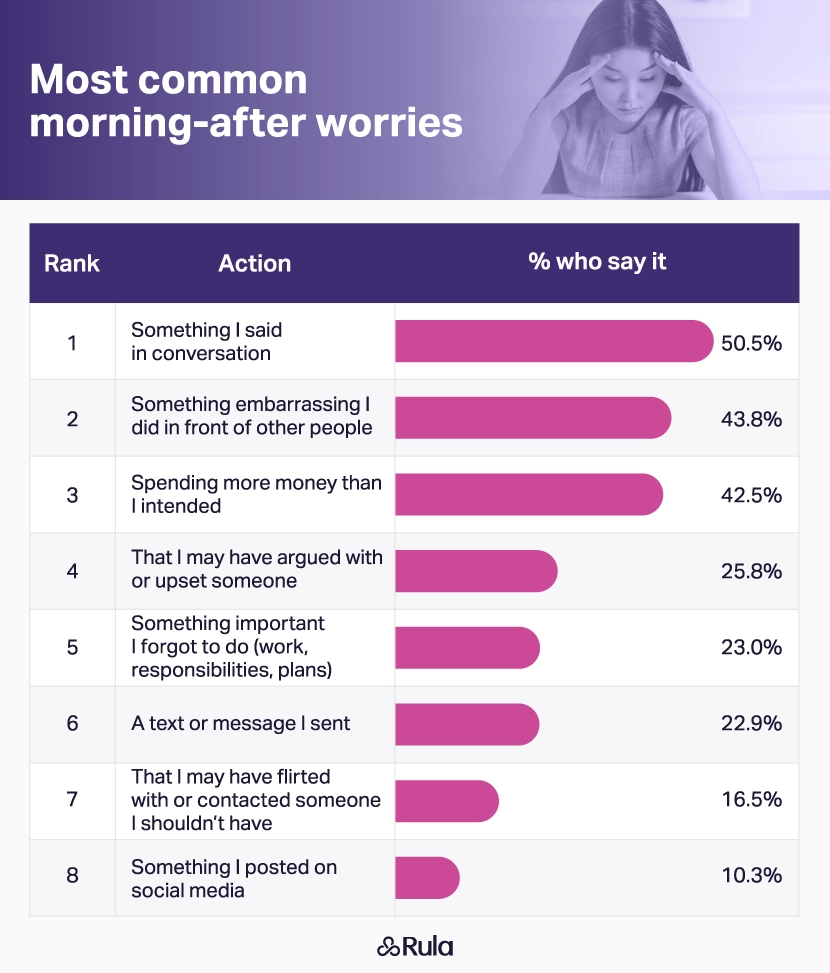 Up first, we found that one in two Americans worry about something they said in conversation while drinking. Alcohol is sometimes referred to as a “truth serum” because while we are sober, we have a better handle on our filter to avoid saying things that might upset or irritate someone. While drunk words are not always sober thoughts, they can often be interpreted as such, potentially causing conflicts.
Similarly, lowered inhibitions while drinking can also lead to actions we might have never done while sober. This brings us to our second most common worry the morning after drinking, worrying about something embarrassing done in front of others (44%). For some people, this can simply mean showing off dance moves that were reserved for the privacy of our bedroom, but for others, it can mean more intense behaviors like picking a fight with staff at the bar.
Controlling spending can be difficult after a few too many drinks, which is why 43% of Americans say they find themselves waking up concerned about the state of their bank account. For one in four people, worries revolve around how their actions impacted others as they might have argued with or upset someone the night before. Rounding out the top five for the most common worries is concerns about something important that was forgotten while intoxicated.
Overall, we found that regrets and worries are common among Americans who drink alcohol. In fact, nearly one in four say they have sent a text message while drinking and later regretted it. Similarly, 69% of people say they have checked their phones, texts, or social media the next morning out of concern for something they posted or said while under the influence.
How Americans cope with hangxiety
Through our research, we found that 55% of Americans have changed their drinking habits due to anxiety or negative emotions they experience the following day. But changing drinking habits is only part of the story. When hangxiety does set in, many people are left searching for ways to ease the emotional and mental aftermath.
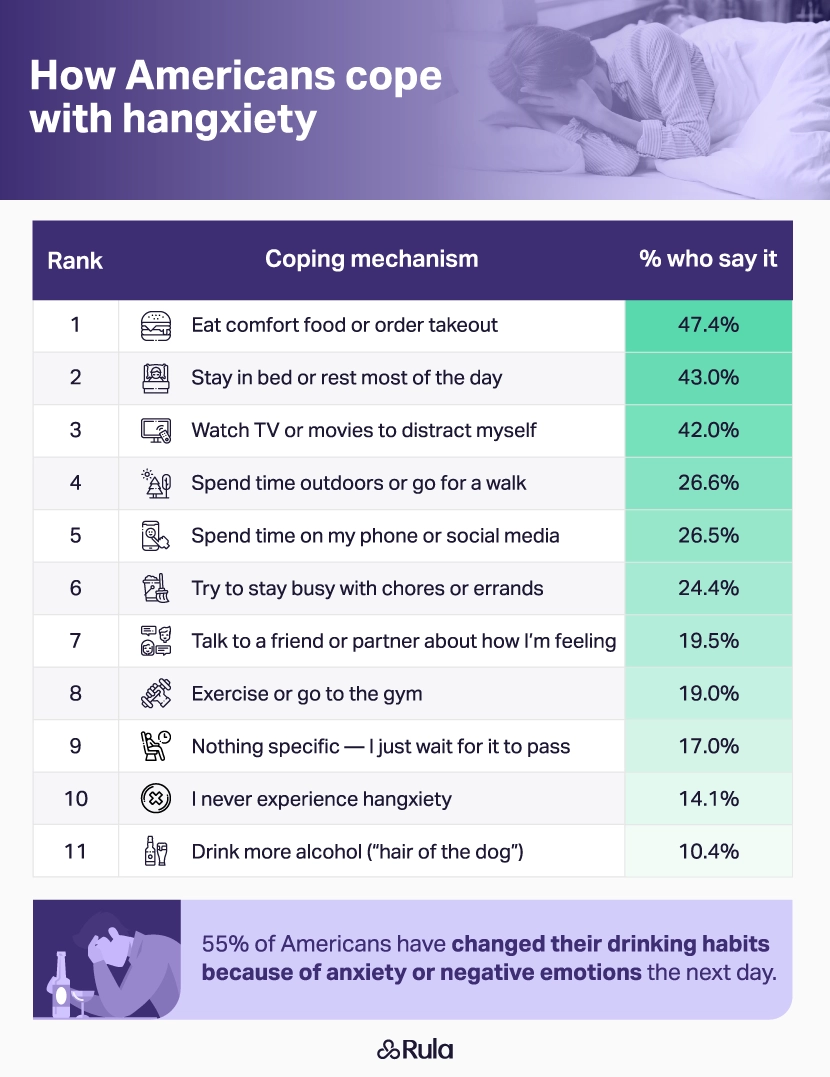 That’s why, for the final portion of this study, we wanted to learn more about the coping mechanisms Americans turn to after a night of drinking. Up first as the most common activity people use to reduce hangxiety is eating comfort food or ordering takeout (47%).
For 43% of people, simply staying in bed for most of, if not the entire, day is the cure for anxiety after drinking. Similarly, more than two-fifths of Americans like to watch TV or movies to distract themselves.
Sometimes, simply breathing fresh air and feeling the sun on your face can improve your mood. Perhaps that’s why 27% of people like to spend time outdoors to combat hangxiety. Wrapping up the top five, we found that more than a quarter of Americans spend time on their phone or scrolling social media the morning after drinking. Overall, people were most likely to report eating comfort food and staying in bed as the most effective coping mechanisms.
Combat anxiety with Rula
Hangxiety might feel like a one-off consequence of a night out, but for many people, the thoughts that surface the next morning aren’t entirely new. From overthinking conversations to replaying interactions, various patterns can show up in everyday life, too. For some, recognizing these patterns is the first step toward addressing them more consistently.
At Rula, we help people every day on their journey to better mental wellbeing. From combating anxiety to navigating challenges in your romantic relationship, we have trained experts who are here to help. Get started today by filling out a few simple questions regarding the care you are seeking and your insurance provider and get connected to a therapist who is right for you.
Methodology
In this study, we set out to learn about Americans' experiences with hangxiety, the anxiety or negative emotions people experience the day after drinking alcohol. To do this, we surveyed 1,308 Americans who drink at least one alcoholic beverage per week on average.
We then asked a variety of questions including how much respondents drink, how many drinks they typically have, emotional effects they experience the day after drinking, things people worry about after drinking, how they cope with hangxiety, and more.

Rula Health
Rula’s editorial process
Rula’s editorial team is on a mission to make science-backed mental health insights accessible and practical for every person seeking to better understand or improve mental wellness.
Members of Rula’s clinical leadership team and other expert providers contribute to all published content, offering guidance on themes and insights based on their firsthand experience in the field. Every piece of content is thoroughly reviewed by a clinician before publishing.