

Anergia is an extreme lack of energy that is sometimes linked to certain medical and mental health conditions like depression.
Unlike the common, everyday fatigue we all experience from time to time, anergia causes persistent, chronic fatigue that can interrupt your ability to function in daily life.
The first step in treating anergia is seeking a professional evaluation. A medical or mental health professional can identify the underlying cause of your anergia and create an effective treatment plan to help you improve your energy level and quality of life.
Everyone experiences fatigue or exhaustion from time to time. Maybe your work schedule has changed. Or perhaps you have a new baby at home. You might be staying up late to study or because you have a lot on your mind.
No matter the reason, not getting enough rest is something we all face occasionally. But being tired all the time can make even the simplest tasks seem more difficult. It can also take a toll on your mental and physical health and your relationships.
If your energy levels consistently remain low enough to impact your daily life, no matter how much sleep you get, it might be time to seek a professional evaluation. An extreme lack of energy is sometimes referred to as anergia and this experience is tied to certain medical and mental health conditions.
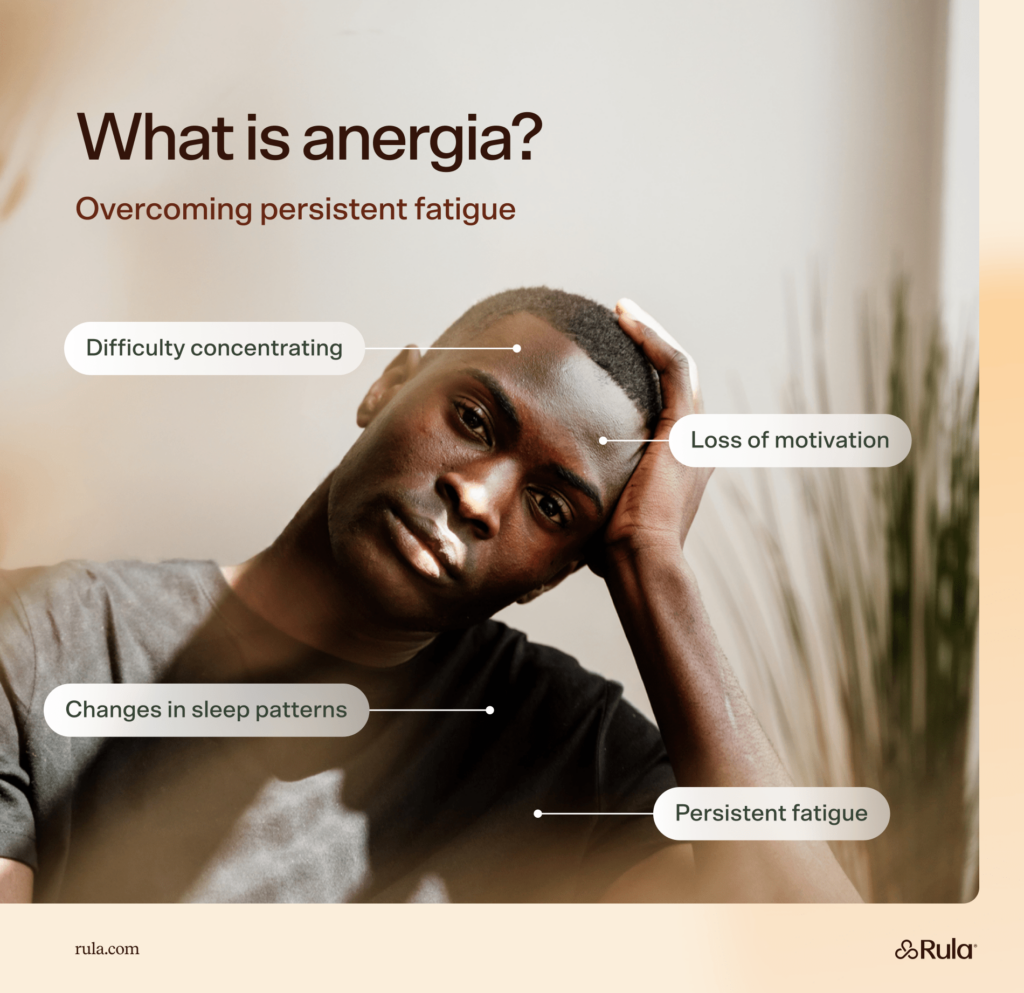
What is anergia?
According to the American Psychological Association, anergia is defined as “the absence of energy.” But unlike occasional tiredness or fatigue, anergia is often a sign of clinical depression. Research shows that 90% of people who live with major depressive disorder experience fatigue even after taking medication.
If you find yourself without the energy or motivation to attend to required tasks, engage socially, or connect with friends and family, it might be time to talk to a medical or mental health professional. They can conduct a thorough evaluation to determine the cause of your anergia and create a treatment plan to address your energy level and any other concerns.
Find your match
Take the first step toward better mental health.
Causes of anergia
There isn’t a single known cause of anergia. But there are a variety of physical, psychological, and lifestyle factors that may put you at greater risk for experiencing a severe loss of energy.
Physical causes: Anergia has been linked to certain heart conditions, thyroid issues, as well as other health concerns such as kidney dysfunction, arthritis, lung disease, and anemia.
Psychological causes: Anergia is strongly tied to several mental health conditions. These conditions affect mood, motivation, and the brain’s ability to regulate energy. Anergia may show up as:
Major depressive disorder (MDD): MDD often causes slowed thinking, lack of motivation, and physical fatigue that makes even simple tasks feel exhausting.
Persistent depressive disorder (PDD): PDD produces long-term, low-grade depressive symptoms that gradually wear down energy over time.
Bipolar disorder (depressive episodes): With bipolar disorder, energy can drop sharply during depressive phases, making daily functioning difficult.
Schizophrenia: With schizophrenia, negative symptoms — like reduced motivation, flat affect, and slowed movement — can cause profound anergia.
Lifestyle factors: Your energy level can be affected by your lifestyle and other environmental factors. For example, not getting adequate nutrition or exercise can lead to anergia.
Symptoms of anergia
The pervasive, chronic lack of energy associated with anergia can take many forms. But some of the most common signs and symptoms of anergia include:
Persistent fatigue: A constant, severe state of tiredness that persists no matter how much you sleep
Loss of motivation: A decreased desire to do things or engage in activities you used to enjoy
Difficulty concentrating: You struggle to focus on tasks and it’s difficult to complete them
Changes in sleep patterns: You sleep too much or not at all, or you struggle to fall or stay asleep
Left untreated, these symptoms can have a serious impact on your daily life, health, and relationships. They can lead you to struggle with tasks and responsibilities at home, work, or school and this can negatively affect your professional or academic performance. A loss of motivation can cause you to withdraw from activities and people you care about and this can damage important relationships.
Chronic anergia can also take a toll on your physical health. Feeling constantly tired can exacerbate existing health issues and put you at greater risk of developing a sleep disorder such as insomnia.
Diagnosing anergia
If you or someone you care about is struggling with extreme tiredness, know that you’re not alone and that help is available. Anergia can feel overwhelming, but the first step toward feeling better is getting a diagnosis from a medical or mental health professional.
You should consider seeing a doctor if:
Your fatigue lasts longer than a few weeks.
Rest, sleep, or time off don’t improve your energy.
Your low energy makes it hard to work, study, or take care of daily tasks.
You notice other symptoms, like weight changes, low mood, brain fog, or shortness of breath.
Your fatigue appears suddenly and feels severe.
You’re worried something serious might be going on.
A provider will ask questions about your symptoms, your daily functioning, and when the tiredness started. They may want to know how your energy levels change throughout the day, what makes your symptoms better or worse, and whether the fatigue is affecting your mood or concentration.
You’ll also talk about your medical history, mental health history, lifestyle habits, and any medications you take. Because anergia can be linked to both physical and psychological causes, most providers use a few different tools to understand the full picture.
Your provider may:
Complete a depression or mental health assessment to see whether your symptoms match a condition like clinical depression or bipolar disorder
Order blood work to check for anemia, thyroid issues, vitamin deficiencies, infection, or other medical problems
Recommend additional physical exams if they suspect heart or lung issues
Ask about your sleep habits to rule out sleep disorders
Getting answers can feel reassuring. Even if the process takes time, a diagnosis helps you understand why you feel this way — and what treatments may help you get your energy back.
The care you need, when you need it
Learn how Rula can support your mental health journey
Treating anergia
After receiving a formal diagnosis from a medical or mental health professional, you and your provider can work together to create a plan to address your anergia treatment.
Depending on the cause of your fatigue, this might include medical interventions and medications, lifestyle changes including diet and exercise habit shifts, and psychological supports like therapy that focus on how to treat extreme low energy.
Your provider may also give you some suggestions for self-management and prevention. This might include stress-reducing techniques like mindfulness meditation, creating a bedtime routine to support good sleep hygiene, strengthening your support network, or other daily changes that can help restore your energy levels.
Anergia isn’t just feeling tired. It’s a deep, ongoing lack of energy that can make even simple daily tasks feel overwhelming. Seeking a professional evaluation can help you understand what you’re experiencing.

Brandy Chalmers, LPC
Clinical reviewer
Find care with Rula
If you’re experiencing chronic fatigue that’s impacting your daily functioning, it may be a sign of anergia. While everyone feels tired at times, anergia is typically associated with health concerns like depression, thyroid issues, and poor diet.
Managing anergia often requires professional support. It’s best to meet with a provider who can identify the underlying cause and create a treatment plan to help restore your energy.
At Rula, we’re here to help you feel better. Rula makes it easy to find a licensed therapist or psychiatric provider who takes your insurance. That way, you don’t have to choose between great care and a price you can afford.
Rula patients pay about $15 per session with insurance, and 93% say they feel better after getting care through Rula. We have 21,000+ providers, and appointments are available as soon as tomorrow. We’re here to help you take the next step — wherever you are in your mental health journey.
Find therapists near you
San Diego, CA – Joliet, IL – Dallas, TX – Tampa, FL – Greensboro, NC – Find your city

Liz Talago
Liz Talago, M.ed. is a mental health professional turned content writer and strategist based in the Detroit metro area. As an independent consultant for mental health organizations, Liz creates meaningful connections between brands and their audiences through strategic storytelling. Liz is known for championing diverse perspectives within the mental health industry and translating bold ideas into inspiring, affirming digital experiences.
In her free time, you can find her hiking with her two German Shepherds, puttering around her dahlia garden, or spending time with her family.

Shakirra Jones LMHC, LPC, NCC
Shakirra Jones is a Licensed Professional Counselor in Georgia. She is a graduate of Tuskegee University and the Chicago School of Professional Psychology. She has previously worked in community mental health, college counseling and substance use recovery.
She is passionate about creating safe, supportive spaces for people from communities that are historically underserved.
Rula’s editorial process
Rula’s editorial team is on a mission to make science-backed mental health insights accessible and practical for every person seeking to better understand or improve mental wellness.
Members of Rula’s clinical leadership team and other expert providers contribute to all published content, offering guidance on themes and insights based on their firsthand experience in the field. Every piece of content is thoroughly reviewed by a clinician before publishing.