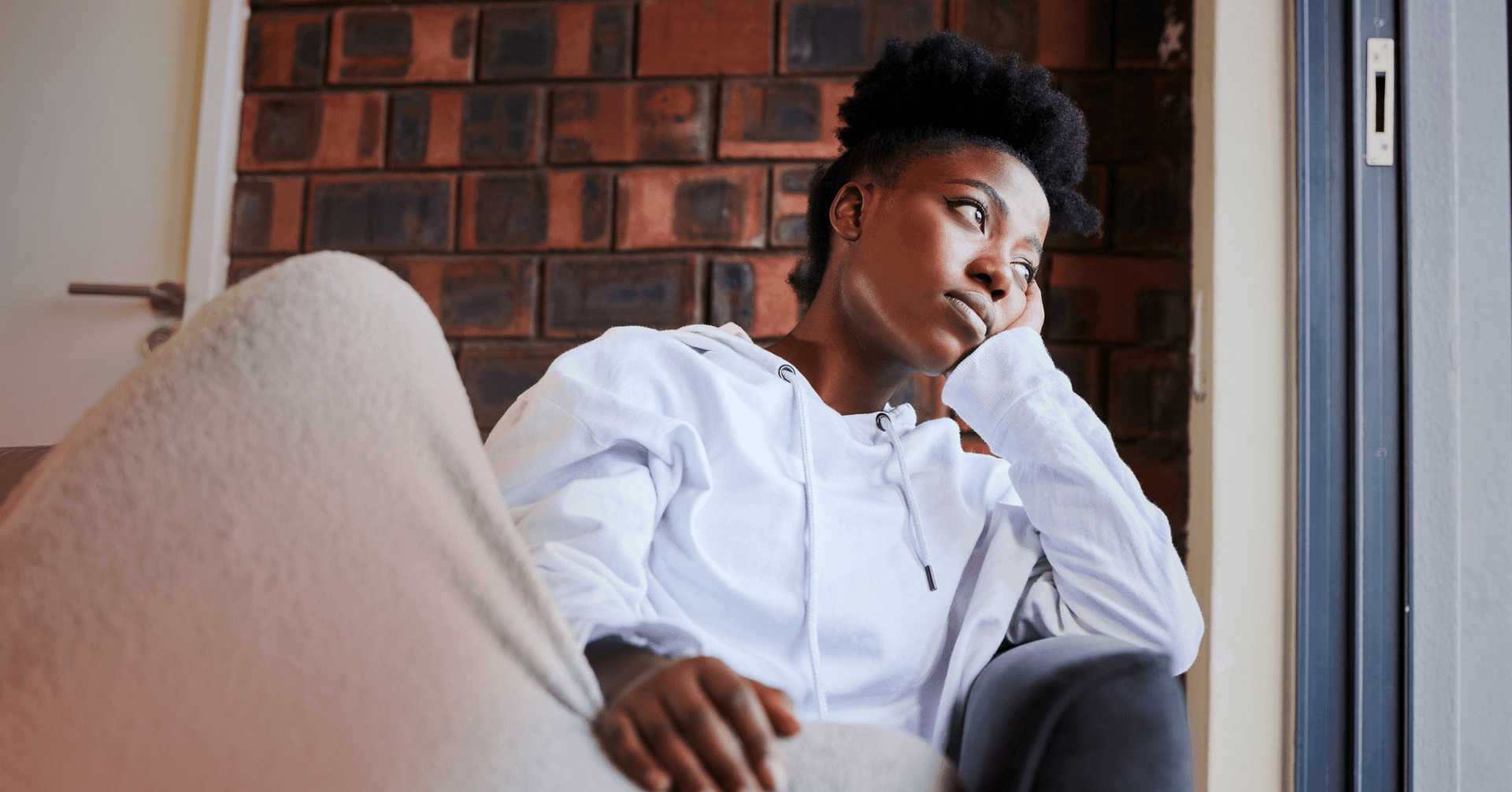
Depression can affect the way you experience love, connection, and closeness in a relationship.
Feeling disconnected from your partner doesn't automatically mean you've fallen out of love. Depression and other mental health conditions can sometimes play a role.
Taking time to reflect, talking with your partner, and seeking support can help you better understand your feelings and decide what to do next.
If you’ve been feeling distant from your partner, you may be wondering, "Have I fallen out of love, or am I depressed?" You’re not alone. Depression can affect the way you feel, think, and connect with other people. It can make you feel numb, disconnected, or less interested in things you once enjoyed, including your relationship.
That can make it hard to know what's causing the change. Are your feelings about the relationship shifting, or is depression getting in the way of feeling close to your partner? The answer isn’t always obvious. But learning more about the signs can help you better understand what you're experiencing. With the right support, many people find clarity and feel more connected again.
Signs you’re unhappy in your relationship
Every relationship goes through ups and downs. But if your feelings have changed over time, you may notice patterns that go beyond a rough patch [1].
Some signs you may be unhappy in your relationship include:
Feeling emotionally disconnected from your partner
Losing interest in spending time together
Avoiding conversations or quality time
Feeling more irritated or frustrated than usual
Daydreaming about being single or in a different relationship
Feeling lonely [2], even when you’re together
Feeling like your emotional needs aren’t being met
Caring less about shared goals or future plans
Putting little effort into maintaining the relationship
Feeling relief rather than sadness when you’re apart
Feeling like you’re staying because you have to, not because you want to
It’s important to remember that these signs don’t automatically mean you’ve fallen out of love. Stress, burnout, depression, life changes, and other mental health concerns can also affect how connected you feel in a relationship. That’s why it’s helpful to look at the bigger picture before jumping to conclusions.
Signs it could be depression
Depression can affect the way you feel about almost every part of your life, including your relationship. Because of this, some people worry they’ve fallen out of love when they’re actually experiencing symptoms of depression.
Signs that depression may be playing a role include:
Losing interest in many activities, not just your relationship
Feeling emotionally numb or disconnected
Having low energy most days
Withdrawing from friends, family, and social activities
Feeling hopeless, empty, or sad
Changes in sleep or appetite
Having trouble concentrating or making decisions
Feeling guilty, worthless, or overly self-critical
In some cases, depression can make it harder to feel positive emotions, including love, excitement, and connection. This may lead you to question your relationship even when your feelings for your partner haven't actually changed.
At the same time, depression can put real strain on a relationship. It may affect communication, intimacy, and the ability to meet each other’s needs. While some people choose to end relationships during periods of depression, it’s often helpful to consider whether depression may be influencing your perspective before making major relationship decisions.
If you’re unsure if your feelings are related to depression, relationship concerns, or both, talking with a mental health professional can help you gain clarity and decide what steps to take next.
Can depression make you fall out of love?
Depression can affect the way you feel about your relationship. It can make it harder to feel connected, excited, or emotionally close to your partner. Because of this, some people wonder if they’ve fallen out of love when depression may actually be affecting their emotions.
Depression may affect relationships in several ways:
Emotional numbness: Feeling disconnected from your partner
Low energy: Having less motivation for dates, conversations, or time together
Less interest in sex: Wanting physical intimacy less often
Pulling away from others: Spending less time with your partner or avoiding connection
Irritability: Feeling more frustrated or impatient than usual
Hopelessness: Believing things won’t get better
Negative thinking: Focusing on problems more than the positive
Loss of interest: Feeling less excited about activities, plans, or experiences you used to enjoy together
Depression isn’t the only mental health condition that can affect relationships. Anxiety can lead to constant worry or a need for reassurance. Obsessive-compulsive disorder (OCD) can cause unwanted doubts about the relationship. That’s why it’s important to look at your overall mental health when trying to understand changes in your feelings.
How to tell what’s affecting your emotions
It isn’t always easy to tell whether you’re falling out of love, experiencing depression, or dealing with a mix of both. Sometimes the signs overlap. Taking a step back and looking at the bigger picture can help you better understand what's going on.
Ask yourself these questions:
Is it just my relationship, or is my mental health affecting other parts of my life too?
When did these feelings begin?
Do I still feel connected to my partner sometimes?
Am I unhappy in the relationship or unhappy overall?
What happens when we talk about it?
What patterns do I notice over time?
Would professional support help me gain clarity?
You don’t have to figure it all out at once. With time, self-reflection, and support, many people gain a clearer understanding of their feelings and what they need moving forward.
What you can do about emotional distance
If you’re feeling emotionally distant from your partner, try not to assume you already know the cause. Emotional distance can happen when feelings change, but it can also happen during depression. Before making a major relationship decision, it can help to gather more information about what you're experiencing.
Consider taking these next steps:
Talk with your partner. You don’t need all the answers first. Share what you’ve been noticing, and listen to their perspective.
Track your mood for a few weeks. Notice whether feelings of numbness, sadness, low energy, or disconnection show up only in your relationship or throughout your life.
Address symptoms of depression. If you’re struggling with low mood, loss of interest, poor sleep, or hopelessness, focus on getting support before making major relationship decisions.
Try reconnecting on purpose. Plan a date, spend quality time together, or have a deeper conversation. Notice how you feel before, during, and after.
Consider individual therapy. A therapist can help you sort through your emotions and better understand what’s driving the disconnection.
Consider couples therapy. If relationship issues are contributing to the problem, couples therapy can help improve communication and emotional connection.
Think carefully about ending the relationship. If you’ve worked on your mental health, communicated openly, and still feel consistently disconnected over time, it may be worth considering whether the relationship is meeting your needs.
The care you need, when you need it
Learn how Rula can support your mental health journey
Depression can make it harder to feel connection, joy, and affection. As a result, some clients start focusing more on what's wrong in the relationship and less on what's working. The good news is that awareness can help bring much-needed clarity.

Brandy Chalmers, LPC
Clinical reviewer
Find care with Rula
If you’re wondering if you’ve fallen out of love or if depression may be affecting your feelings, it can be difficult to know what's at the root of the change. Looking at the bigger picture of your emotions, mental health, and relationship can help you better understand what’s going on. Support is available, and many people find greater clarity with the help of a mental health professional.
At Rula, we’re here to help you feel better. Rula makes it easy to find a licensed therapist or psychiatric provider who takes your insurance. That way, you don’t have to choose between great care and a price you can afford.
Rula patients pay about $15 per session with insurance, and 93% say they feel better after getting care through Rula. We have 21,000+ providers, and appointments are available as soon as tomorrow. We’re here to help you take the next step — wherever you are in your mental health journey.
References
- A Phenomenological Study of Falling Out of Romantic Love https://www.researchgate.net/publication/287572572_A_Phenomenological_Study_of_Falling_Out_of_Romantic_Love
- Gender differences in emotional disconnection and emotional loneliness in romantic couples: a 3-day ecological momentary assessment study https://www.frontiersin.org/journals/psychology/articles/10.3389/fpsyg.2026.1787426/full

Brandy Chalmers, LPC
Having faced challenges like childhood abuse, neglect, and the loss of her father to suicide, Brandy Chalmers is deeply passionate about providing compassionate care. She is a Licensed Professional Counselor, Nationally Certified Counselor, and Registered Play Therapist with a Master’s Degree in Clinical Counseling and Marriage and Family Therapy.
Brandy also teaches at a university, sharing her expertise with future mental health professionals. With over a decade of experience in settings like inpatient care and private practice, she specializes in helping clients with perfectionism, trauma, personality disorders, eating disorders, and life changes.
Rula’s editorial process
Rula’s editorial team is on a mission to make science-backed mental health insights accessible and practical for every person seeking to better understand or improve mental wellness.
Members of Rula’s clinical leadership team and other expert providers contribute to all published content, offering guidance on themes and insights based on their firsthand experience in the field. Every piece of content is thoroughly reviewed by a clinician before publishing.