
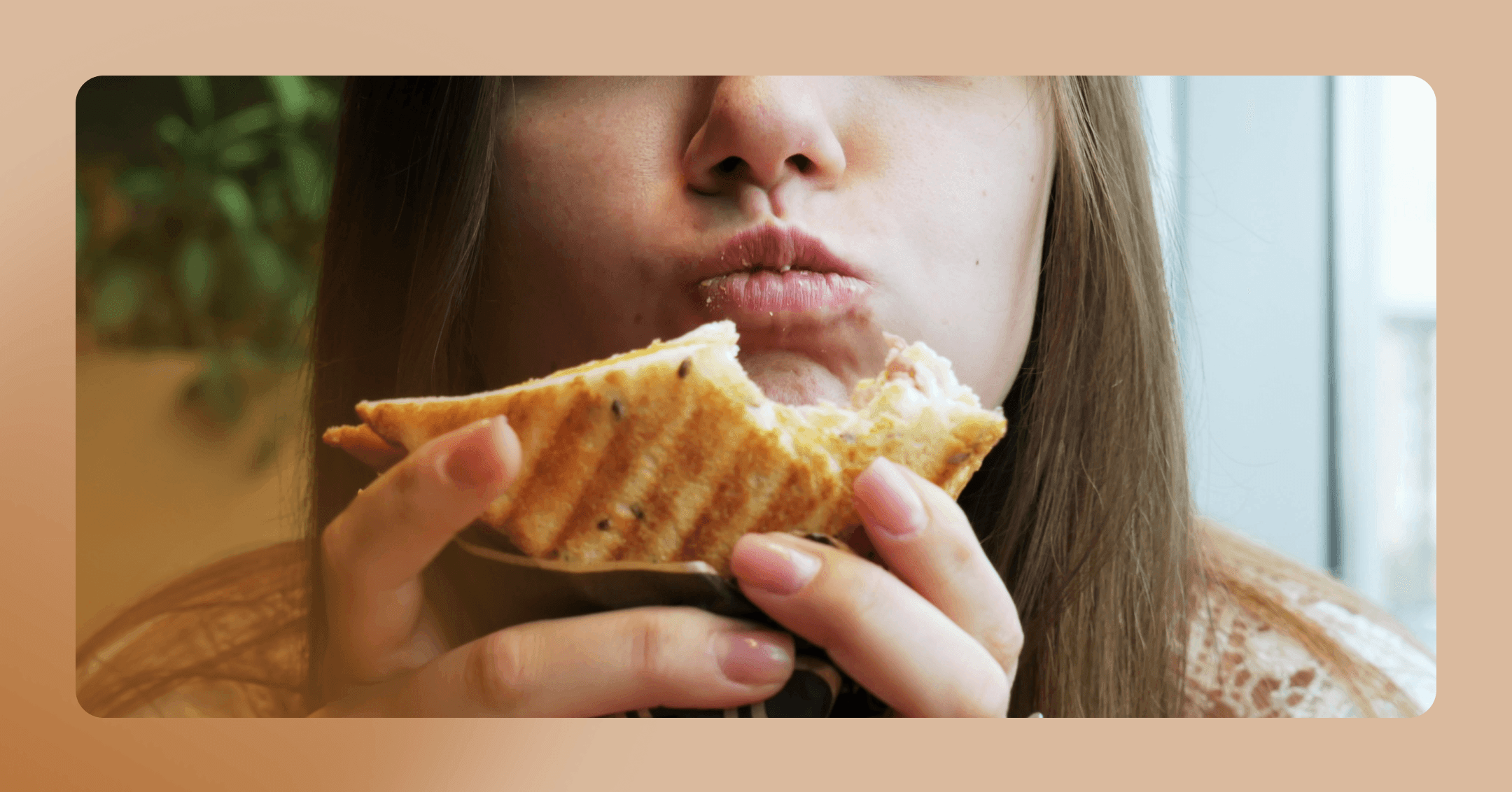
Food guilt is when you feel stressed or anxious about your food choices, like eating something you didn’t plan or something that feels like “too much.”
It’s become normal for people to feel guilty after eating “bad” foods, but excessive food guilt may be a symptom of an eating disorder like anorexia nervosa or orthorexia.
With the appropriate strategies and support, you can learn to recognize unhelpful thought patterns and improve your relationship with food.
Have you ever felt bad about your food choices? Maybe you regretted late-night snacking or felt like you overindulged on vacation. This experience is pretty common, with many people wondering why they feel guilty after eating.
The good news is that it's possible to learn how to enjoy food without regretting or overthinking it. Here, we review what food guilt feels like, why it happens, and when it may be a sign of an underlying mental health concern.
What food guilt feels like
Food guilt is an emotional response to the type and quantity of food you eat. It’s often associated with specific triggers [1], like overeating, breaking your diet, or eating “bad” foods. While there’s no right or wrong way to eat, food guilt can make people feel anxious, upset, and ashamed.
For example: You’re at a birthday party, and you help yourself to a second slice of cake. Afterward, you might worry that others were judging you or that you’ll need to eat healthy for the next week. Food guilt can be particularly challenging during the holiday season, when people are more likely to indulge in seasonal treats or extra drinks.
Some other examples of how food guilt can influence your thoughts, feelings, and behaviors include:
You feel disappointed in yourself for losing control or breaking your diet.
You compare your eating habits and food choices to other people’s.
You think that one or two “unhealthy choices” ruin your hard work.
You compensate for calories through excessive exercise, skipping meals, or restricting your food intake.
You have thoughts like, “Why did I need to eat so much?”
Find your match
Take the first step toward better mental health.
Why do we assign moral value to food?
Think back to when you were a kid and were offered a piece of cake or a second slice of pizza. Did you feel joy or guilt? For many people, food guilt is something that develops due to diet culture, fitness culture, and other societal expectations.
In today’s world, food has developed a sort of moral power. Instead of simply eating what tastes good or helps you feel your best, we’ve learned to label our food choices as good or bad. Salad = good. Sugar and carbs = bad. As a result, you may find that foods and experiences that make you feel happy can also trigger guilt.
Research shows that it’s common for people to regularly experience guilt about their food choices. A study of college-aged women found that social eating, snacking between meals, and eating sweet treats [2] were all associated with mild food guilt. Another study found that emotional eating and wasting money on food [3] are both common causes of food guilt in teens.
How guilt about eating holds you back
Feeling guilty or embarrassed about your eating habits can lead to a range of unhealthy thoughts and behaviors.
This includes:
Low self-esteem: People usually feel guilty when they think they've done something wrong. Judging yourself for how and what you eat can lead to low self-esteem and other insecurities.
Unhealthy eating habits: Food guilt is an emotional response that can contribute to binge eating, restrictive eating, and other disordered eating behaviors.
Social avoidance: You may avoid dining out with friends because you feel judged by your eating choices.
Rumination: Food guilt can lead to a cycle of unhealthy thoughts. For example, you might overthink what you ate in a day or regret certain food choices.
Feeling guilty about eating too much Halloween candy doesn't necessarily mean you have an eating disorder. But when this guilt influences your mental and physical well-being, it may be a sign of an underlying concern.
Guilt can be a symptom of eating disorders, including:
The care you need, when you need it
Learn how Rula can support your mental health journey
How to stop feeling guilty after eating
For many people, eating is connected to feelings like shame and guilt. But it doesn't have to be.
These five tips can help you recognize harmful thought patterns and repair your relationship with food.
1. Recognize your triggers
Are there specific foods that make you feel guilty? Or maybe it’s certain habits, like snacking late at night, eating when you’re stressed, or wasting food. When you understand what’s triggering your feelings, you can find ways to address the root cause.
2. Practice mindful eating
Another way to help reduce food guilt is to eat with intention. This involves listening to your body’s internal cues for feeling hungry and full. If you’re hungry at 3 p.m., don’t feel bad about having a snack before dinner. Mindful eating also means making a point to enjoy your food, even those that you might consider unhealthy or off limits.
3. Challenge your guilt
Have you ever stopped to think about why your eating habits leave you feeling stressed? While some foods may be more nutritious than others, there’s really no such thing as good versus bad foods. Plus, eating is personal — so what works best for one person may not be right for another.
Instead of thinking, “I shouldn’t have eaten that pizza,” remind yourself, “I was craving a slice, and that hit the spot.”
4. Show yourself compassion
We’re often our own worst critics, especially when it comes to body image. It may not feel easy, but remember to show yourself kindness and compassion as you change your relationship with eating.
Instead of comparing yourself to others or feeling like there's something wrong with you, make space for positivity. For example, you might tell yourself, “Eating is an act of self-respect,” or, “Food nourishes my body and soul.”
5. Get professional support
Guilt is associated with the development and maintenance [4] of eating disorders. If what or how much you eat is causing you significant emotional distress, know that therapy can help. A mental health professional can help you challenge negative thoughts and behaviors, develop new coping skills, and improve your relationship with food.
Several effective techniques can treat eating disorders, including cognitive behavioral therapy (CBT), dialectical behavioral therapy (DBT), nutrition therapy, and interpersonal therapy (IPT).
Sometimes the simplest first step is reminding yourself that food choices are not character traits. You’re allowed to eat without grading yourself — and that tiny shift in self-talk can open the door to real freedom.

Brandy Chalmers, LPC
Clinical reviewer
Find care with Rula
Many people have a complex relationship with food. But if your eating habits cause regular stress and guilt, it may be worth speaking with a mental health professional. Therapy can help you understand what's driving those feelings and how to cope with food-related guilt in a healthy way.
At Rula, we’re here to help you feel better. Rula makes it easy to find a licensed therapist or psychiatric provider who takes your insurance. That way, you don’t have to choose between great care and a price you can afford.
Rula patients pay about $15 per session with insurance, and 93% say they feel better after getting care through Rula. We have 21,000+ providers, and appointments are available as soon as tomorrow. We’re here to help you take the next step — wherever you are in your mental health journey.
References
- Exploring the Role of Guilt in Eating Disorders: A Pilot Study https://pmc.ncbi.nlm.nih.gov/articles/PMC11941697/
- Guilty or not? Feelings of guilt about food among college women https://pubmed.ncbi.nlm.nih.gov/19133305/#:~:text=Abstract,more%20often%20feelings%20of%20guilt
- The underlying role of food guilt in adolescent food choice: A potential conceptual model for adolescent food choice negotiations under circumstances of conscious internal conflict https://www.sciencedirect.com/science/article/pii/S0195666323025564#:~:text=The%20desire%20to%20reduce%20the,change%20their%20initial%20food%20choice

Alex Bachert
Alex Bachert is a freelance copywriter and mental health advocate. Since earning her masters degree in public health, she has focused her career on creating informative content that empowers people to prioritize their health and well-being. Alex has partnered with organizations like Ro, WellTheory, and Firsthand, and her work has been recognized by the Digital Health Association.
When she’s not writing about mental health, Alex is usually playing pickleball, meeting with her local board of health, or enjoying time with her three kids.

Brandy Chalmers, LPC
Having faced challenges like childhood abuse, neglect, and the loss of her father to suicide, Brandy Chalmers is deeply passionate about providing compassionate care. She is a Licensed Professional Counselor, Nationally Certified Counselor, and Registered Play Therapist with a Master’s Degree in Clinical Counseling and Marriage and Family Therapy.
Brandy also teaches at a university, sharing her expertise with future mental health professionals. With over a decade of experience in settings like inpatient care and private practice, she specializes in helping clients with perfectionism, trauma, personality disorders, eating disorders, and life changes.
Rula’s editorial process
Rula’s editorial team is on a mission to make science-backed mental health insights accessible and practical for every person seeking to better understand or improve mental wellness.
Members of Rula’s clinical leadership team and other expert providers contribute to all published content, offering guidance on themes and insights based on their firsthand experience in the field. Every piece of content is thoroughly reviewed by a clinician before publishing.