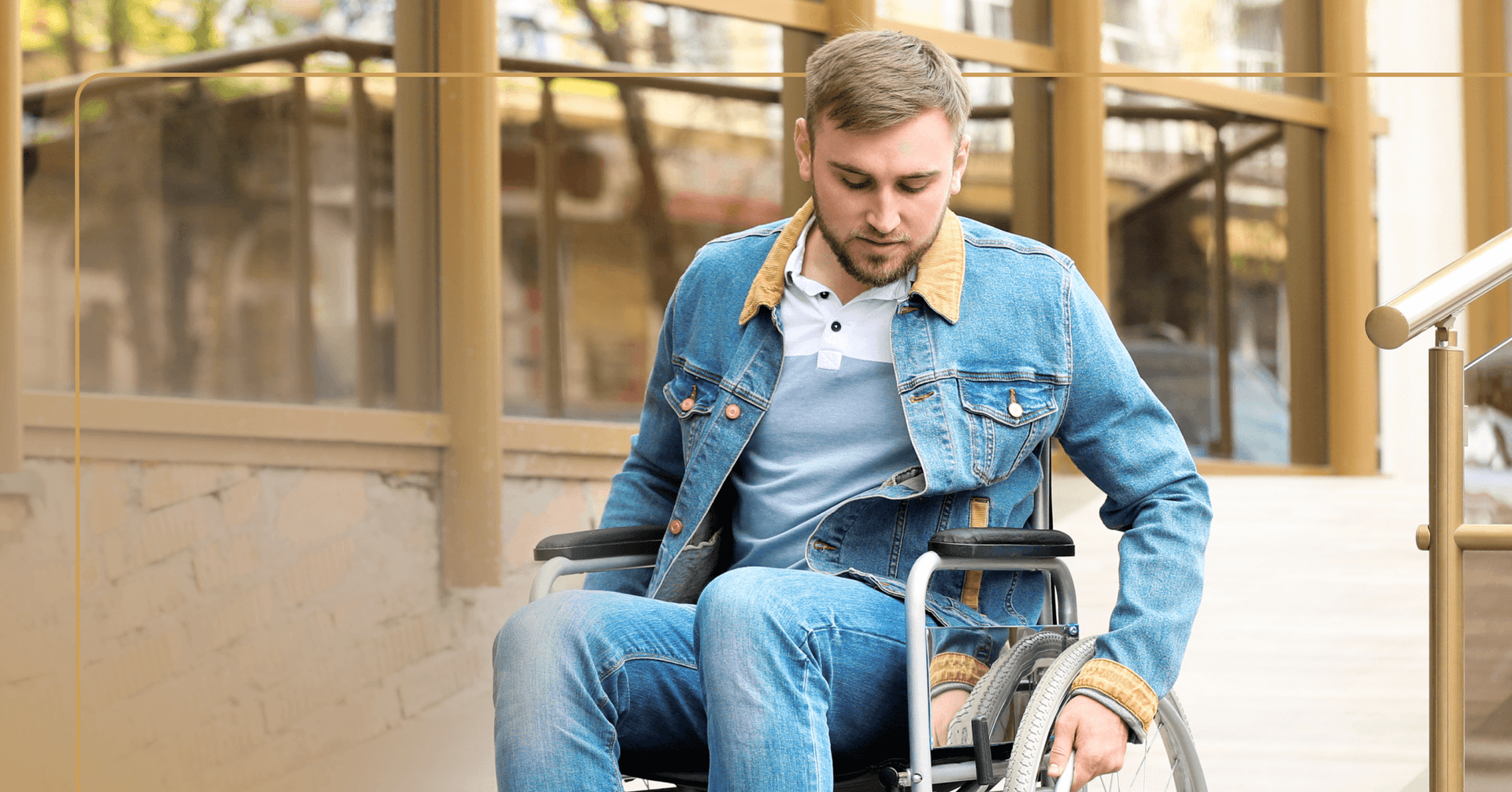
Internalized ableism happens when negative beliefs about disability become part of how you see yourself.
It can lead to shame, self-criticism, and difficulty asking for help or support.
With self-compassion, support, and awareness, it’s possible to challenge these beliefs and build pride about your experiences.
Have you ever felt embarrassed about your disability or worried that needing help made you a burden?
If so, you may have experienced internalized ableism. Internalized ableism happens when negative beliefs about disability become part of how you see yourself. This can affect people with many different disabilities and conditions, including physical disabilities or neurodivergent conditions like attention-deficit hyperactivity disorder (ADHD) and autism spectrum disorder (ASD).
Disability is common. In fact, about 1 in 4 adults [1] in the U.S. live with a disability. Yet many people grow up hearing messages that make disability seem like something to hide or overcome. Today, more people are challenging those ideas and embracing disability as a normal part of human diversity.
Signs of internalized ableism
Internalized ableism can affect the way you think about yourself, your disability, and your place in the world. It may show up as feelings, beliefs, or behaviors that make it harder to accept your needs or ask for support.
Common signs of internalized ableism include:
Feeling ashamed of your disability or diagnosis
Believing you should be able to do everything on your own
Avoiding accommodations or support because you don't want to seem “different”
Feeling guilty for needing help
Hiding your needs from others
Pushing yourself beyond your limits to prove your worth
Masking your disability or symptoms to fit in or avoid judgment
Feeling like you're a burden to other people
Judging yourself harshly when you can’t meet certain expectations
Believing your value depends on being productive or independent
Internalized ableism is also linked to mental health concerns [2] such as anxiety, depression, low self-esteem, burnout, and chronic stress. Over time, constantly feeling like you need to hide, change, or overcome parts of yourself can take a toll on your emotional well-being.
Some people also notice internalized ableism in their self-talk. For example, you might think:
“I should be able to handle this on my own.”
“I don’t need accommodations. I just need to try harder.”
“Everyone else can do this. What’s wrong with me?”
“I don’t want people to think I’m lazy.”
“I’m asking for too much.”
“My needs are a burden to other people.”
You may blame yourself for things outside your control, feel guilty for needing support, or believe your worth depends on what you can do. These thoughts often develop after years of hearing messages that disability is something to hide, fix, or overcome. Recognizing these patterns is often the first step toward challenging them.
Where internalized ableism comes from
Internalized ableism doesn’t come out of nowhere. It often develops after years of hearing messages about what people “should” be able to do and how they should live. Over time, these messages can affect how you think about yourself and your disability.
Some common causes [3] of internalized ableism include:
Negative beliefs about disability: Hearing that disabled people are less capable or successful than others
Pressure to fit in: Feeling like you need to hide your disability or avoid asking for help
Discrimination: Being treated unfairly because of your disability
Microaggressions: Hearing comments like, “You don’t look disabled,” or, “Everyone struggles sometimes.”
Family or cultural messages: Growing up with the belief that needing help is a weakness
Lack of positive role models: Rarely seeing disabled people represented in a positive way
Comparing yourself to others: Feeling like you should be able to do the same things as people who don’t have a disability
Letting go of internalized ableism
Letting go of internalized ableism takes time. If you’ve heard negative messages about disability for years, it’s normal for those messages to affect how you see yourself. The good news is that these beliefs can change.
Here are a few ways to get started:
Pay attention to your self-talk. Notice thoughts like, “I’m a burden,” or, “I should be able to do this on my own.” These thoughts may feel true, but they aren’t always accurate.
Challenge old beliefs. Ask yourself where those beliefs came from. Needing help, accommodations, or extra time doesn’t make you weak.
Practice self-compassion. Talk to yourself the way you’d talk to a friend. Everyone has strengths, struggles, and support needs.
Connect with others. Spending time with disabled people or joining disability communities can help you feel understood and supported.
Learn about disability pride. Reading about disability history or following disability advocates can help you see disability in a more positive light.
Focus on your strengths. Your worth isn’t based on how productive, independent, or successful you are. Take time to recognize what makes you unique.
It can also help to ask yourself a few questions, like:
Where did I learn this belief?
Would I say this to another disabled person?
Is this thought based on facts or fear and shame?
What would it look like to be kinder to myself?
For some people, therapy can help. A therapist can help you challenge harmful beliefs, build self-esteem, and work through experiences of stigma or discrimination. Therapy can also help if internalized ableism is affecting your anxiety, depression, stress, or overall well-being.
The care you need, when you need it
Learn how Rula can support your mental health journey
I often remind clients that support is part of every healthy relationship. Most of us are happy to help the people we care about, yet we hold ourselves to a different standard. Accepting support doesn’t make you a burden. It gives others a chance to show up for you, just as you would for them.

Brandy Chalmers, LPC
Clinical reviewer
Find care with Rula
Internalized ableism can affect the way you think about yourself, your needs, and your worth. The good news is that these beliefs can be challenged, and support is available to help you build a more accepting and compassionate view of yourself.
At Rula, we’re here to help you feel better. Rula makes it easy to find a licensed therapist or psychiatric provider who takes your insurance. That way, you don’t have to choose between great care and a price you can afford.
Rula patients pay about $15 per session with insurance, and 93% say they feel better after getting care through Rula. We have 21,000+ providers, and appointments are available as soon as tomorrow. We’re here to help you take the next step — wherever you are in your mental health journey.
References
- Disability Impacts All of Us Infographic https://www.cdc.gov/disability-and-health/articles-documents/disability-impacts-all-of-us-infographic.html
- Implications of internalised ableism for the health and wellbeing of disabled young people https://pmc.ncbi.nlm.nih.gov/articles/PMC9304167/
- Internalized oppression and deaf people’s mental health https://www.nature.com/articles/s41598-025-89789-1

Brandy Chalmers, LPC
Having faced challenges like childhood abuse, neglect, and the loss of her father to suicide, Brandy Chalmers is deeply passionate about providing compassionate care. She is a Licensed Professional Counselor, Nationally Certified Counselor, and Registered Play Therapist with a Master’s Degree in Clinical Counseling and Marriage and Family Therapy.
Brandy also teaches at a university, sharing her expertise with future mental health professionals. With over a decade of experience in settings like inpatient care and private practice, she specializes in helping clients with perfectionism, trauma, personality disorders, eating disorders, and life changes.
Rula’s editorial process
Rula’s editorial team is on a mission to make science-backed mental health insights accessible and practical for every person seeking to better understand or improve mental wellness.
Members of Rula’s clinical leadership team and other expert providers contribute to all published content, offering guidance on themes and insights based on their firsthand experience in the field. Every piece of content is thoroughly reviewed by a clinician before publishing.