
Emotional distance happens when couples no longer feel close or connected. It can make people feel lonely even when they’re in a relationship.
Attachment styles, trauma, stress, and a lack of shared values are a few reasons people may grow apart.
Honest conversations, a willingness to be vulnerable, and couples counseling (if needed) can help increase emotional closeness.
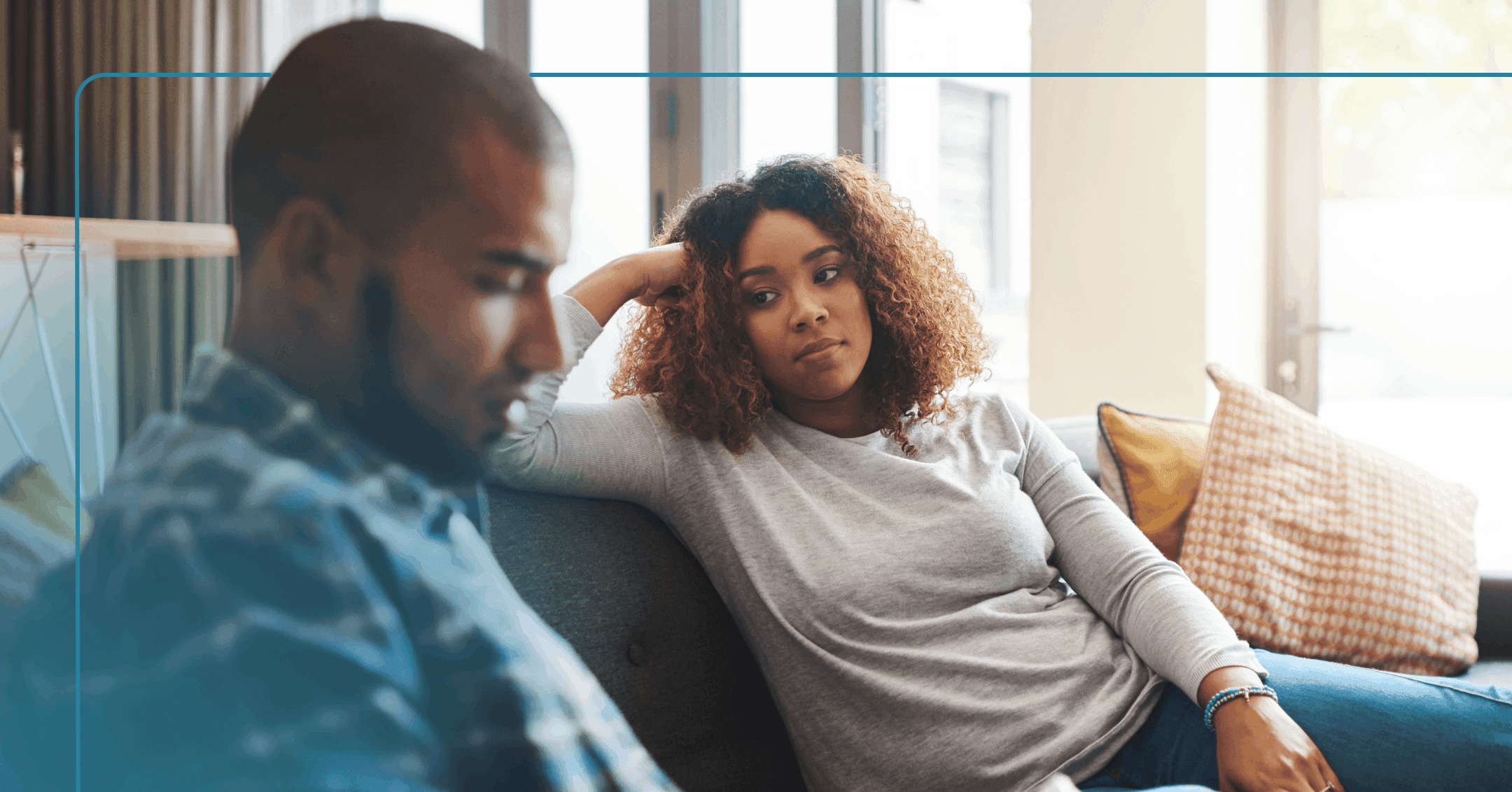
Imagine that you’re sitting on the couch or lying in bed with your partner. But even though you’re in close physical proximity, you still feel miles apart. Perhaps your conversations have become surface level, awkward, or routine. You rarely talk about your inner experiences, and you don’t feel like you can be vulnerable with each other.
These feelings are often the result of emotional distance or a lack of emotional intimacy. Emotional distance creates a dynamic in which people don’t feel seen, heard, or valued by their partner. It can make people feel like roommates rather than loving partners.
Fortunately, if you’ve experienced a loss of closeness in your relationship, you can take action to repair your connection. Learning more about emotional distance can help reignite the romantic spark and feel closer again.
Signs of emotional distance in a relationship
Maybe you’re not feeling as close to your partner as you’d like. But you’re not sure exactly why.
These are signs of emotional distance in your relationship:
You rarely talk about hopes, dreams, fears, emotions, or anything deep.
You can go days without having an actual conversation. You barely even argue anymore.
You’ve stopped hugging, kissing, or cuddling. You may no longer have a satisfying sexual relationship, or one at all.
When you ask your partner a personal question, they give one-word answers or say they don’t know how to respond.
Thoughtful or romantic gestures are rare or nonexistent.
Even though you’re together all the time, you feel lonely when you’re with your partner.
When something good happens, you no longer feel excited to share it with your partner.
Conversely, when something bad happens, you don’t look to your partner for support.
As you review these signs, keep in mind that occasional emotional distance is typical in most long-term partnerships. For example, maybe one of you usually needs some time alone after an argument.
Wanting time to yourself or to maintain your sense of independence isn’t what creates emotional distance. But when you have a hard time connecting or enjoying each other’s presence, it may be a sign of emotional distance.
The care you need, when you need it
Learn how Rula can support your mental health journey
Deeper reasons for emotional distance in relationships
Emotional distance can develop for a variety of reasons. Sometimes, people just grow apart. They may not share values or goals for the future. But sometimes, there can be deeper reasons.
Our childhood relationships with our primary caregivers [1] can shape how we relate to others as adults. For example, a person may develop a dismissive or avoidant attachment style if they didn’t receive the love and care they deserved as a child. If their parents were cold or dismissive of their feelings, they may unconsciously avoid vulnerability as a way to stay safe. However, this once-protective coping strategy may no longer serve them in adult relationships.
Trauma and stress can also impact emotional closeness. If you’ve been hurt, lied to, or betrayed in the past, you may struggle with emotional vulnerability. You might shut down during conflict or pull away when someone tries to engage on a deeper level.
Couples who experience traumatic events together — for example, a miscarriage — can also go through emotional distance, especially if they navigate the emotional aftermath differently. Trauma-informed therapy can help you process these responses and strengthen your emotional connection with your partner.
What growing apart might mean for your relationship
Human beings are wired for connection [2]. So when we don’t have the closeness we crave, it can be incredibly painful.
An emotional disconnect [3] — whether intentional or not — can lead to:
Resentment
Withdrawal or feeling “checked out”
Loneliness
Increased stress
Rumination (repeated, upsetting thoughts)
Increased conflict or tension
An inability to solve problems collaboratively
This can damage your relationship and negatively impact your personal well-being. Reduced relationship quality [4] has been shown to increase the risk of mental and physical health problems and reduce quality of life overall.
Addressing emotional distance together
If you’ve been feeling distant in your relationship, it’s possible to address it with the right attitude and approach.
Start with these tips:
Bring it up. The first step — and sometimes the most difficult — is admitting to yourself and each other that you aren’t as close as you’d like to be. When you initiate the conversation, you can say something like, “I’ve really been missing you lately. Can we make some time to talk about our relationship tonight?”
Get buy in. To rebuild emotional intimacy, both partners need to play a role. You might have some things to work on as individuals. But to be successful, it needs to be a joint effort. If your partner is unwilling to work on this, you may need to ask yourself if you want to stay in the relationship.
Look back. Think about the time in your relationship when you felt most connected. Maybe it was early on in dating or during an important life event. Reflect on what made that closeness possible back then. You can’t go back in time, but you might be able to incorporate some of the conditions — like regular date nights — that created emotional intimacy in the past.
Ask for help. We don’t get road maps for our relationships, and sometimes it can help to have some outside guidance. Couples counseling can provide a safe space and dedicated time to work on your relationship. Your therapist can help you understand why you’re experiencing emotional distance and learn skills to help bring you closer together.
A common mistake is trying to ‘fix’ the distance through logic, productivity, or self-improvement alone instead of together. Real closeness is rebuilt through small, consistent moments of true connection from both partners.

Ashley Ayala, LMFT
Clinical reviewer
Find care with Rula
Emotional distance happens when couples struggle to connect, communicate, and be vulnerable with each other. This can be painful and take a toll on your well-being. But you can take steps to repair your bond and feel closer. This might include talking about your feelings with your partner, reflecting on times when you felt more connected, and exploring couples therapy.
At Rula, we’re here to help you feel better. Rula makes it easy to find a licensed therapist or psychiatric provider who takes your insurance. That way, you don’t have to choose between great care and a price you can afford.
Rula patients pay about $15 per session with insurance, and 93% say they feel better after getting care through Rula. We have 21,000+ providers, and appointments are available as soon as tomorrow. We’re here to help you take the next step — wherever you are in your mental health journey.
References
- Attachment, emotion regulation, and well‐being in couples: Intrapersonal and interpersonal associations https://pmc.ncbi.nlm.nih.gov/articles/PMC7383855/#jopy12523-abs-0001
- Relationships from an evolutionary life history perspective https://psycnet.apa.org/record/2012-32735-002
- When Couples Disconnect: Rumination and Withdrawal as Maladaptive Responses to Everyday Stress https://delongis-psych.sites.olt.ubc.ca/files/2017/12/When-couples-disconnect.pdf
- Marital Conflict, Depressive Symptoms, and Functional Impairment https://pmc.ncbi.nlm.nih.gov/articles/PMC2507765/

Liz Talago
Liz Talago, M.ed. is a mental health professional turned content writer and strategist based in the Detroit metro area. As an independent consultant for mental health organizations, Liz creates meaningful connections between brands and their audiences through strategic storytelling. Liz is known for championing diverse perspectives within the mental health industry and translating bold ideas into inspiring, affirming digital experiences.
In her free time, you can find her hiking with her two German Shepherds, puttering around her dahlia garden, or spending time with her family.

Ashley Ayala, LMFT
Ashley is a Licensed Marriage and Family Therapist who specializes in generational healing and family dynamics. Ashley has worked in schools, clinics, and in private practice. She believes that people’s relationships, including our relationship with ourselves, greatly shape our experiences in life.
Ashley is committed to empowering others to show up authentically and deepen their self understanding. This passion stems from taking a critical lens on her own life story and doing inner healing. One of her favorite quotes is “Be yourself and the right people will love the real you.”
Rula’s editorial process
Rula’s editorial team is on a mission to make science-backed mental health insights accessible and practical for every person seeking to better understand or improve mental wellness.
Members of Rula’s clinical leadership team and other expert providers contribute to all published content, offering guidance on themes and insights based on their firsthand experience in the field. Every piece of content is thoroughly reviewed by a clinician before publishing.