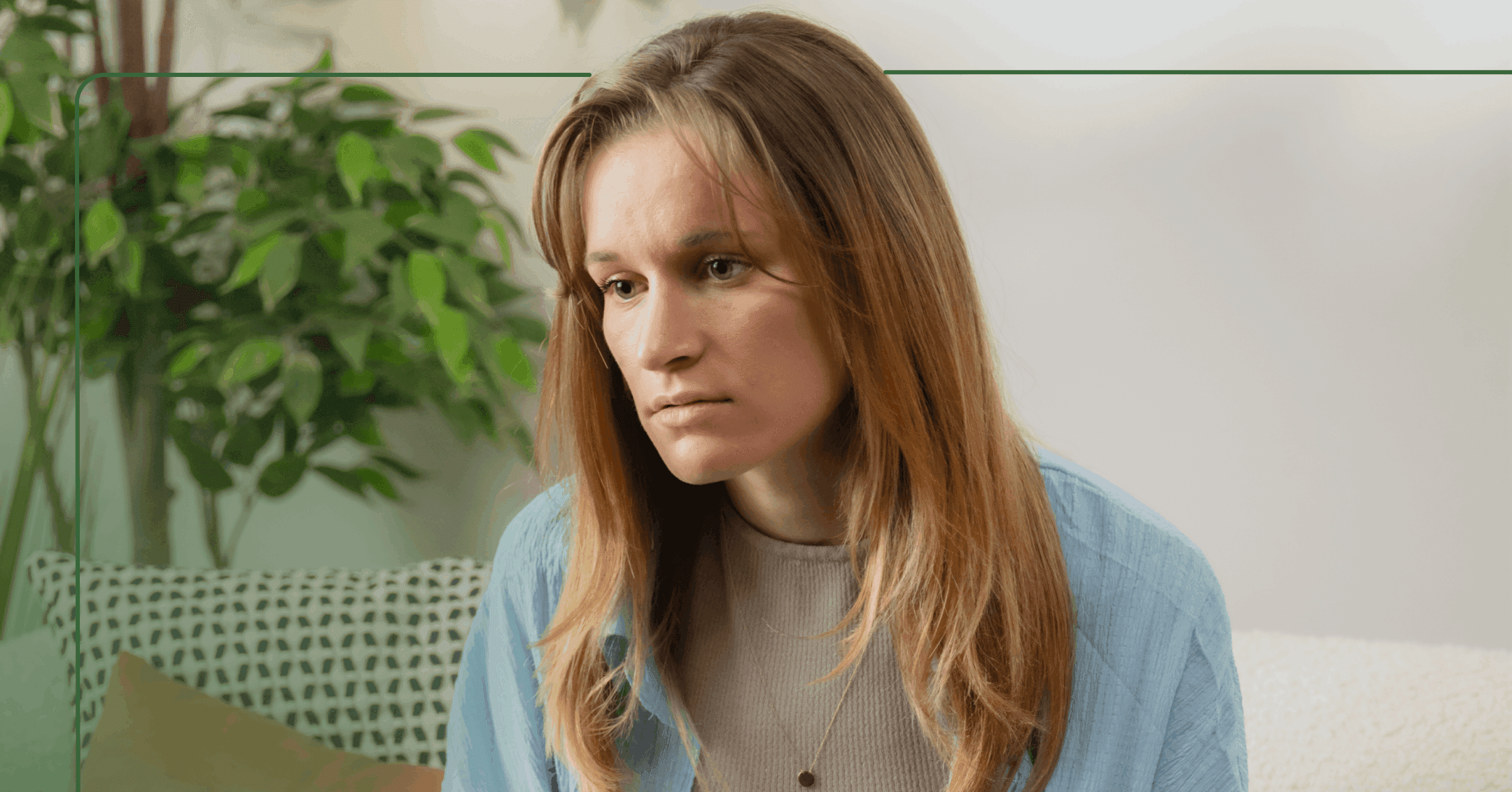
Guilt is the uneasy feeling you get when you think you’ve done something wrong or hurt someone, even if it wasn’t on purpose. Excessive guilt can contribute to mental health issues [1] or make existing ones worse.
Feeling guilty can help you grow and make better choices, but too much guilt can trap you in shame and make you blame yourself for things you can’t control or change.
Talking with a therapist can help you understand where your guilt comes from, challenge negative thoughts, and learn healthy ways to move forward.
Of all the emotions we experience, feeling guilty may be one of the hardest to handle. It can weigh on your mind, make you replay mistakes, and leave you stuck in regret.
Guilt is a common and normal emotion that almost everyone experiences at some point. But if it sticks around too long, it can turn toxic and make it hard to move forward. If you need extra support dealing with guilt, a therapist can help you understand your feelings, be kinder to yourself, and start to move forward.
What’s fueling your guilt?
People can feel guilty for all kinds of reasons. It’s normal to feel guilty after making a mistake or lashing out and saying something you didn’t mean.
Yet guilt can also creep in when you think you’ve disappointed someone or haven’t met your own expectations. You might even feel guilty for doing what’s best for you, like turning down plans when you’re tired or setting boundaries to keep your relationships happy.
Some common reasons people feel guilty include:
Perfectionism: People who are perfectionistic often feel guilt more easily. If you set high standards for yourself or worry about letting others down, you might take on guilt even when you’ve done nothing wrong.
Infidelity: If you were unfaithful to your partner, you may feel denial, anger, and other emotions, along with guilt.
Parenting: Believing you’re not doing enough for your children or comparing yourself to other parents can lead to guilt.
Mental health conditions: People with obsessive-compulsive disorder (OCD) or depression often experience guilt more intensely [2]. With OCD, guilt can come from unwanted thoughts that make you feel responsible for things you can’t control. In depression, guilt often shows up as self-blame, like when you hold yourself accountable for things that weren’t your fault.
Moral or religious beliefs: Guilt can also come from feeling like you’ve broken a moral rule, disappointed your faith community, or let down a higher power [3]. If you believe you must behave “perfectly” to deserve love or forgiveness, you may be more likely to experience guilt.
Success: Sometimes people feel guilty for their success. This can be a form of imposter syndrome [4]. You might feel bad about getting a promotion, earning more money, or reaching a goal when others haven’t.
Early childhood experiences: Sometimes guilt doesn’t come from what you’ve done but rather how you were raised. If you grew up in a home where love or approval had to be earned, you might have learned to feel guilty [5] even when you did nothing wrong. That kind of guilt can show up in adulthood as people pleasing, overapologizing, or feeling responsible for others’ emotions.
Find your match
Take the first step toward better mental health.
When guilt can be healthy
Guilt isn’t always a bad thing. Sometimes it’s your mind’s way of nudging you to make things right or learn from a mistake.
Healthy guilt might help you:
Protect your relationships: Feeling guilty after saying something hurtful can remind you to apologize and be more thoughtful next time.
Stay true to your values: If you break a promise, guilt can motivate you to take responsibility and be more honest in the future.
Learn from mistakes: When guilt helps you see what went wrong and what you can do differently, it becomes a powerful tool for growth instead of punishment.
Take care of yourself: Skipping rest or self-care might make you feel guilty for letting yourself burn out. That feeling can motivate you to set boundaries and prioritize your well-being.
When guilt becomes toxic
Guilt can become unhealthy [6] when it lingers too long or becomes too intense. Instead of learning from your mistakes, it can make you feel shame, anxiety, or that you’re unworthy. This can impact your mental health over time.
Watch out for these signs of unhealthy guilt:
Your feelings of guilt aren’t fading with time. Instead, they become more intense. You find yourself often thinking about your guilt and feel like you can’t move on.
Your inner voice becomes a harsh critic. Instead of treating yourself with kindness, you constantly tell yourself that you’re not good enough or you don’t deserve good things.
You feel responsible for others’ emotions. You even feel like you need to fix their problems or always keep them happy.
Your physical health is worsening. Whether your guilt is keeping you up at night and impacting your sleep, or feeling guilty after eating, this could be a sign of unhealthy guilt.
You’re isolating. Guilt prevents you from maintaining relationships or reaching out to people you care about.
If you’re experiencing unhealthy guilt, therapy can help you process your feelings, forgive yourself, and embrace self-compassion.
The care you need, when you need it
Learn how Rula can support your mental health journey
What to do if you’re struggling with guilt
Learning how to move past guilt starts with recognizing that everyone makes mistakes. Guilt can be a sign that you care, but holding on to it for too long can keep you from moving forward.
Instead of letting guilt weigh you down, try these steps to work through it in a healthy way:
Acknowledge and address what you’re feeling. Don’t ignore your guilt or push it away. Naming the feeling is the first step to understanding it. Ask yourself, “Why do I feel guilty?” and, “Is there anything that I can do to address the root cause of my guilt?”
Challenge unrealistic guilt. Ask yourself if your guilt is about something you did wrong or if you’re being too hard on yourself. If it’s beyond your control, give yourself permission to release it.
Talk it out. Guilt sometimes feels lighter when you share it. Talking to a trusted friend, family member, or therapist can help you see things more clearly. Cognitive behavioral therapy (CBT) and acceptance and commitment therapy (ACT) can help you understand, manage, and release guilt in healthy ways.
Focus on growth, not perfection. Remember that guilt is meant to guide you, not define you. Every mistake is a chance to learn and become stronger.
Try journaling. Writing down your feelings can be one of the most healing ways to work through guilt. Journaling helps you understand what you’re feeling, why you feel that way, and what you can do about it.
Practice mindfulness. Mindfulness means paying attention to the present moment with kindness instead of judgment. When you practice mindfulness, you learn how to build self-compassion, reduce stress and shame, and see mistakes as part of being human.
Healthy guilt points us toward repair and growth. It reminds us of our values and encourages better choices next time. Unlike toxic guilt, which keeps people stuck in shame, healthy guilt can become a powerful guide for self-awareness and healing.

Ashley Ayala, LMFT
Clinical reviewer
Find care with Rula
Guilt can be a heavy burden, but healing starts when you reach out for support. A therapist can help you understand where your guilt comes from and if it’s healthy or holding you back. Together, you can learn to separate what’s truly your responsibility from what isn’t, learn to let go of past mistakes, and turn self-criticism into understanding and self-compassion.
At Rula, we’re here to help you feel better. Rula makes it easy to find a licensed therapist or psychiatric provider who takes your insurance. That way, you don’t have to choose between great care and a price you can afford.
Rula patients pay about $15 per session with insurance, and 93% say they feel better after getting care through Rula. We have 21,000+ providers, and appointments are available as soon as tomorrow. We’re here to help you take the next step — wherever you are in your mental health journey.
References
- Shame, guilt, and depressive symptoms: a meta-analytic review https://pubmed.ncbi.nlm.nih.gov/21219057/
- Guilt Feelings in Obsessive Compulsive Disorder: An Investigation between Diagnostic Groups https://pmc.ncbi.nlm.nih.gov/articles/PMC9409889/
- Guilt, Shame, and Religious Ingratiation: The Mediating Role of Prayer and the Moderating Role of Intrinsic Religious Orientation https://journals.sagepub.com/doi/10.1177/00916471231184556
- Guilt over success, impostor phenomenon, and self-sabotaging behaviors https://link.springer.com/article/10.1007/s12144-024-05697-z
- Adverse childhood experiences and shame- and guilt-proneness: Examining the mediating roles of interpersonal problems in a community sample https://www.sciencedirect.com/science/article/abs/pii/S0145213419304107
- Guilt vs. Shame [Infographic] https://www.nicabm.com/guilt-vs-shame/

Linda Childers
Linda is an award-winning medical writer with experience writing for major media outlets, health companies, hospitals, and both consumer and trade print and digital outlets.
Her articles have appeared in the Washington Post, USA Today, WebMD, AARP, Brain+Life, HealthyWomen.org, The Rheumatologist, California Health Report, Everyday Health, HealthCentral, and many other media outlets.
While juggling the responsibilities of being part of the “sandwich generation” and caring for both her toddler son and terminally ill mother, a nurse friend encouraged her to seek therapy, which helped her to learn coping strategies and manage her depression. Linda hopes her work will help to destigmatize mental health conditions and encourage others to get the help they need.

Ashley Ayala, LMFT
Ashley is a Licensed Marriage and Family Therapist who specializes in generational healing and family dynamics. Ashley has worked in schools, clinics, and in private practice. She believes that people’s relationships, including our relationship with ourselves, greatly shape our experiences in life.
Ashley is committed to empowering others to show up authentically and deepen their self understanding. This passion stems from taking a critical lens on her own life story and doing inner healing. One of her favorite quotes is “Be yourself and the right people will love the real you.”
Rula’s editorial process
Rula’s editorial team is on a mission to make science-backed mental health insights accessible and practical for every person seeking to better understand or improve mental wellness.
Members of Rula’s clinical leadership team and other expert providers contribute to all published content, offering guidance on themes and insights based on their firsthand experience in the field. Every piece of content is thoroughly reviewed by a clinician before publishing.