

Adverse childhood experiences (ACEs) are traumatic events, like abuse or neglect, that occur during childhood. They can have a long-lasting effect on a person’s mental and physical health.
The adverse childhood experiences test is a 10-item tool that providers use to assess exposure to childhood trauma — sometimes called a childhood trauma test for adults. The higher the number of adverse childhood experiences, the higher the risk of developing certain problems later in life.
ACEs can contribute to mental health conditions, chronic disease, and employment challenges in adulthood. But with resources like therapy and a strong support system, you can learn to manage your symptoms and live a more fulfilling life.
Childhood trauma is any dangerous, violent, or extremely distressing event that affects a person before they turn 18. When discussing childhood trauma, mental health professionals will sometimes refer to the three E’s of trauma: event, experience, and effect.
The event is the actual harm or threat, like being bullied or witnessing abuse, while the experience is a person’s unique perception of that event. The effect refers to the way the event and experience impact a person. For many people, childhood trauma has both short-term and long-term effects on their health, behaviors, and potential for success.
That’s why tools like the adverse childhood experiences test — often known as ACE questions — were designed to help professionals identify childhood trauma in adults.
The care you need, when you need it
Learn how Rula can support your mental health journey
What are adverse childhood experiences?
Adverse childhood experiences (ACEs) are traumatic or potentially traumatic events — like abuse, neglect, and parental divorce — that happen during childhood.
Unfortunately, ACEs are common in the U.S., with around 64% of adults experiencing at least one ACE before age 18. Anyone can experience an ACE, but there are certain risk factors that increase your chances of childhood trauma and associated toxic stress. ACEs are more common among children who:
Don’t have a close connection with their caregivers
Are raised by caregivers who don’t have a close connection with others, like friends, neighbors, and extended family
Have a caregiver who doesn’t understand their developmental needs
Have a caregiver who was abused or neglected when they were a child
Are raised in a low-income or low-education home
Are raised in a home with high conflict, negative communication styles, or physical punishment
What is the adverse childhood experiences test?
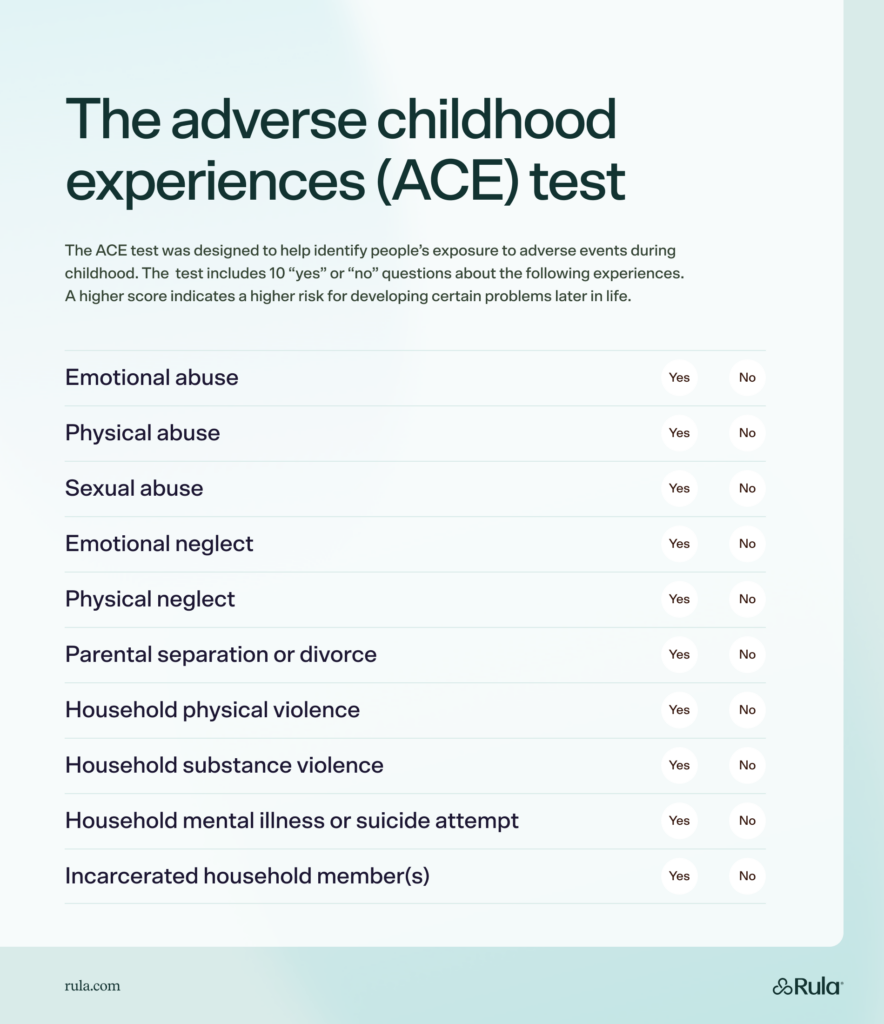
The ACE test is a short tool that can help people assess their exposure to adverse experiences early in life. It’s based on research from two leading healthcare organizations. These organizations found that people who had adverse experiences during childhood faced a greater risk of mental and physical health problems during adulthood.
The ACE test includes 10 “yes” or “no” ACE questions about the following adverse childhood experiences:
Emotional abuse
Physical abuse
Sexual abuse
Emotional neglect
Physical neglect
Parental separation or divorce
Household physical violence
Unhealthy substance use in the household
Household mental illness or suicide attempt
Incarcerated household member(s)
How does the ACE test work?
The ACE test scoring system ranges from 0-10, with each “yes” response counting as one point. This total is known as your ACE score. A higher score indicates a higher risk for developing certain problems later in life.
A mental health professional can administer the test, or you can complete it on your own. Either way, it’s important to review the results with your provider. The ACE test isn’t a diagnostic tool, meaning it can’t provide an official diagnosis. But it can help your provider learn more about your unique history and how to best support your mental health needs.
Did an adult often swear at you, insult you, or make you feel afraid?
*Quiz content written by Lolly Coleman, MS, LMFT.
What are the 10 ACE questions?
The ACE test includes 10 ACE questions that ask whether you experienced certain types of adversity before age 18. Each question is answered with “yes” or “no.” These questions cover five types of abuse or neglect and five forms of household dysfunction. Together, they make up the childhood trauma test for adults that helps people understand how early experiences may still affect them today.
Here are the 10 ACE questions in simple terms:
Did an adult often swear at you, insult you, or make you feel afraid?
Did an adult physically hurt you?
Did an adult or older person ever touch you sexually or force sexual contact?
Did you often feel unloved, unsupported, or emotionally neglected?
Did you often not have enough food, clean clothes, or basic physical care?
Were your parents separated or divorced?
Did you see your mother, stepmother, or caregiver being pushed, hit, or threatened?
Did anyone in your home have challenges with heavy alcohol or drug use?
Did anyone in your household live with a health condition or attempt suicide?
Was anyone in your household incarcerated?
These questions help you and your provider talk openly about early life stressors and how they may be shaping your current health.
How to score the ACE test
Scoring the ACE test is simple. Your ACE score is the total number of “yes” answers out of the 10 ACE questions. Each “yes” counts as one point.
A higher ACE score means you had more exposure to early adversity, which can increase the risk for certain mental and physical health concerns. But the score isn’t a diagnosis. It’s simply a tool to help you understand your past and start a conversation with a mental health professional about next steps.
Does the ACE test help identify childhood trauma?
The ACE test was designed to help identify people’s exposure to adverse events during childhood. As an adult, you and your provider can use this information to learn more about your past trauma and how the experiences affect your current well-being.
While the test is an effective tool for identifying several risk factors for trauma, it does have limitations. To start, the ACE test doesn’t address stressors outside the home, like poverty, violence, racism, and other forms of discrimination.
The test also fails to acknowledge protective factors, meaning aspects of people’s lives that contribute to positive outcomes. Examples of positive factors include a strong support system, access to education, skill-building opportunities, and financial stability.
Three tips for overcoming childhood trauma
ACEs and other forms of childhood trauma are linked to mental health conditions, substance use issues, and chronic health problems in adults. They can also negatively impact job opportunities and earning potential. But the good news is that it’s possible to manage childhood trauma and create a more fulfilling future with the right resources and support.
1. Try talk therapy
Childhood trauma affects everyone differently, but many people benefit from working with a therapist or other mental health professional. Talk therapy — including techniques like cognitive behavioral therapy (CBT), eye movement desensitization and reprocessing (EMDR), and exposure therapy — is an effective tool for helping people heal from ACEs and other forms of trauma.
2. Create a strong support system
If you’ve experienced childhood trauma, make it a priority to share your feelings and experiences with someone you trust. If you don’t feel comfortable talking with friends or family, consider joining a support group where you can connect with and learn from others who have similar experiences. Sharing painful memories isn’t always easy, but social support and connection can be an empowering part of the healing journey.
3. Focus on resilience and recovery
There’s no predefined timeline for overcoming childhood trauma. In fact, it’s often an ongoing process. Here are a few best practices to help you build resilience, focus on recovery, and improve your overall well-being.
Positive affirmations: Positive affirmations can help you experience less negative thought patterns and cultivate a healthier self-image. For example, “Today I choose me” or “I deserve to be loved and respected.”
Self-care: Self-care may seem like a buzz word, but making time for regular exercise, balanced meals, and restful sleep is an effective way to manage mental health symptoms linked to trauma and stress. It’s okay to start small: For example, take a 20-minute walk each morning, or turn off your phone 30 minutes before bed.
Grounding techniques: Mindfulness and grounding exercises can be useful tools for managing overwhelming emotions and focusing on the present moment. Yoga, journaling, and exercise are other healthy outlets for channeling difficult feelings and emotions.
An ACE score is information, not destiny. What matters most is the support and healing you choose moving forward.

Brandy Chalmers, LPC
Clinical reviewer
Find care with Rula
If you believe your past is influencing your current well-being, ask your provider about the ACE test. This tool was designed to help mental health professionals understand how and why your earliest experiences still affect you today. For many people, childhood trauma can have a lasting impact on their health, relationships, and potential for success. Fortunately, the right support can help you process your experience and focus on a more fulfilling future.
At Rula, we’re here to help you feel better. Rula makes it easy to find a licensed therapist or psychiatric provider who takes your insurance. That way, you don’t have to choose between great care and a price you can afford.
Rula patients pay about $15 per session with insurance, and 93% say they feel better after getting care through Rula. We have 21,000+ providers, and appointments are available as soon as tomorrow. We’re here to help you take the next step — wherever you are in your mental health journey.
Find trauma and PTSD therapy near you
New York – Texas – California – Georgia – Illinois – Hawaii – Indiana – Virginia – North Carolina – Pennsylvania – Find your city

Alex Bachert
Alex Bachert is a freelance copywriter and mental health advocate. Since earning her masters degree in public health, she has focused her career on creating informative content that empowers people to prioritize their health and well-being. Alex has partnered with organizations like Ro, WellTheory, and Firsthand, and her work has been recognized by the Digital Health Association.
When she’s not writing about mental health, Alex is usually playing pickleball, meeting with her local board of health, or enjoying time with her three kids.

Micaela Gonzalez, LMFT
Micaela has worked in both outpatient and residential mental health treatment programs and has experience working with co-occurring substance use and severe mental health conditions.
Micaela is passionate about working in mental health because mental health concerns impact everyone at some point in life, and she believes it’s important to have non-judgmental spaces to explore the difficulties that come up in life. She loves traveling to new places, experimenting with new recipes, and cuddling with her kitty.
Rula’s editorial process
Rula’s editorial team is on a mission to make science-backed mental health insights accessible and practical for every person seeking to better understand or improve mental wellness.
Members of Rula’s clinical leadership team and other expert providers contribute to all published content, offering guidance on themes and insights based on their firsthand experience in the field. Every piece of content is thoroughly reviewed by a clinician before publishing.