
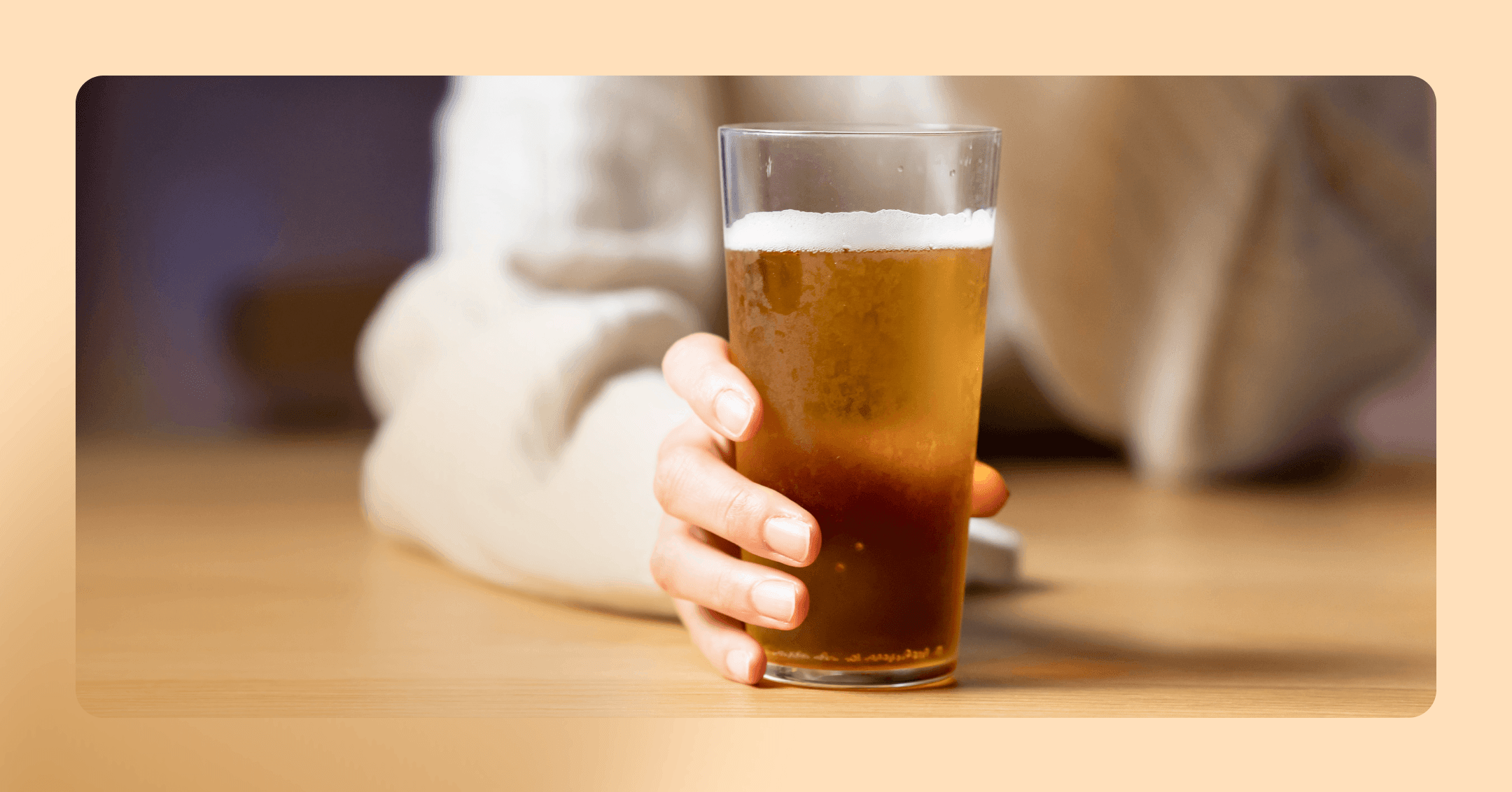
Drinking alcohol can lead to sadness, irritability, and low mood — especially for people with depressive disorders like major depression or persistent depressive disorder.
Alcohol can make you feel depressed for several reasons, including the way it impacts brain chemistry and sleep.
If you're experiencing depression after drinking alcohol, it’s important to seek support. Therapy can help you understand the link between your thoughts and behaviors and develop healthier coping methods.
Have you ever felt a bit down after having a few drinks? The alcohol might make you happy at first, but that’s often replaced with more negative emotions [1] like sadness or worry. Experiencing depression after drinking is particularly common for people who have a depressive disorder like major depression or persistent depressive disorder.
If you’re concerned about how alcohol is impacting your mental well-being, it’s worth speaking with a mental health professional. They can help you understand the link between drinking and depression so you can revisit your habits and learn to manage depressive symptoms.
Signs of depression after drinking alcohol
People drink alcohol for many reasons — to celebrate, to commiserate, to cope. But while a cocktail or a glass of wine might feel right in the moment, it can impact your mental well-being later.
For people with depression, drinking alcohol can actually worsen depressive symptoms, like:
Feelings of sadness or hopelessness
Strong emotional reactions, like anger or irritability
Difficulty controlling negative thoughts
Feeling anxious or on edge
Low motivation or trouble focusing on tasks
After drinking, you may experience an emotional crash. This can include brain fog, emotional numbness, or a low mood that won’t go away.
Having depression also increases your chances of experiencing hangover-induced anxiety. Known as hangxiety, this involves a surge of discomfort or unease after drinking alcohol. You might fixate on things you did or said, leading to feelings like guilt and shame.
Find your match
Take the first step toward better mental health.
Why drinking alcohol makes you feel depressed
Research has found a clear link between depression and substance use disorders (SUD). People with alcohol use disorder (AUD) have an increased risk for depressive disorders [2], and people with depression are twice as likely to develop a substance use issue [3] like AUD.
Even moderate alcohol use [4], like one or two drinks in a night, can contribute to symptoms of depression. Alcohol may help you temporarily cope with stress and other difficult emotions, but it can end up making you feel worse.
Alcohol might also make people feel depressed because it can:
Impact brain chemistry
Alcohol is a depressant [5] that affects the central nervous system. Drinking slows brain activity, which can interfere with things like judgment, communication, and coordination. As a result, you might be more likely to make reckless decisions or say things you wouldn't normally say.
Influence mood
Drinking alcohol increases levels of dopamine and serotonin, which are brain chemicals that play a key role in regulating mood and emotion. This is why people often feel happy, excited, or relaxed after one or two drinks. But, as dopamine and serotonin levels drop, those positive feelings may not last.
Interferes with prescription medication
It’s best to avoid alcohol while taking prescription medications like antidepressants [6]. To start, antidepressants can make you more likely to experience the negative effects of alcohol. For example, you might be more likely to engage in risky behaviors.
Drinking can also prevent antidepressants from working effectively, which means you’re more likely to experience depressive symptoms.
Affects sleep
Drinking alcohol may help you fall asleep quickly, but it can negatively affect your quality of sleep. Research shows that alcohol disrupts your sleep cycle [7], which may leave you feeling groggy or grumpy the next day.
Bring on mental health challenges
In some cases, drinking alcohol can actually trigger depression. Known as a substance-induced mood disorder, this is when depressive symptoms are the direct result of using substances like alcohol. The good news is that the condition is typically temporary, and your symptoms should improve when you stop drinking alcohol [8].
The care you need, when you need it
Learn how Rula can support your mental health journey
How to cope with depression after drinking
Managing depression after drinking requires a comprehensive approach that addresses your mental and physical needs. Here are some tips to help you cope with these feelings.
Prioritize self-care. Alcohol can take a toll on your body, especially if you’re prone to mental health challenges. Instead of dwelling on the physical or emotional side effects, try to focus on what's in your control. For example, stay hydrated, rest your body, and distract yourself with healthy habits like reading.
Reflect on your habits. Take some time to better understand the connection between drinking and your mental health. For example: Do you drink to cope with difficult emotions and situations? How often do you feel depressed after drinking?
Reconsider your relationship with alcohol. If alcohol is impacting your mental health, try to be more mindful about how much you drink and when. Cutting back or eliminating alcohol altogether can have a positive impact on your mental health.
Set healthy boundaries. Depression and drinking can be a tricky cycle, so create some clear boundaries that help you prioritize your mental health. This might mean learning how to say no to friends. For example, you might say, “No thanks, I’m not up for drinking tonight,” or limit yourself to one drink per weekend.
Seek professional support. Depression and AUD require professional support. If you're showing signs of either or both conditions, know that help is available. Working with a therapist can help you understand what’s driving your thoughts and behaviors and develop healthier ways to cope. Treatment varies by person but may include individual therapy, support groups, and/or medication.
I often remind people that when you stop drinking, your brain doesn’t instantly feel better. It needs time to relearn how to create a steady mood without chemical shortcuts. Feeling flat at first doesn’t mean it’s not working. It usually means your system is recalibrating, and that process takes patience.

Brandy Chalmers, LPC
Clinical reviewer
Find care with Rula
If you experience symptoms of depression after drinking alcohol, it’s worth taking some time to reflect on your habits. While it’s common to feel a bit rough after drinking, frequent periods of low mood may be a sign of an underlying condition that requires professional support.
At Rula, we’re here to help you feel better. Rula makes it easy to find a licensed therapist or psychiatric provider who takes your insurance. That way, you don’t have to choose between great care and a price you can afford.
Rula patients pay about $15 per session with insurance, and 93% say they feel better after getting care through Rula. We have 21,000+ providers, and appointments are available as soon as tomorrow. We’re here to help you take the next step — wherever you are in your mental health journey.
References
- Alcohol and mental health https://www.mentalhealth.org.uk/explore-mental-health/a-z-topics/alcohol-and-mental-health#:~:text=Alcohol%20affects%20the%20part%20of,anxiety%2C%20regardless%20of%20your%20mood.
- Alcohol Use Disorder and Depressive Disorders https://pmc.ncbi.nlm.nih.gov/articles/PMC6799954/
- Mood Disorders and Substance Use Disorder: A Complex Comorbidity https://pmc.ncbi.nlm.nih.gov/articles/PMC2851027/
- Alcohol Use and Your Health https://www.cdc.gov/alcohol/about-alcohol-use/index.html
- Alcohol https://medlineplus.gov/alcohol.html
- Substance Abuse https://snaplab.stanford.edu/resources/treatment/substance-abuse
- Alcohol and sleep-related problems https://pubmed.ncbi.nlm.nih.gov/31128400/
- Substance-Induced Mood Disorders https://www.ncbi.nlm.nih.gov/books/NBK555887/

Alex Bachert
Alex Bachert is a freelance copywriter and mental health advocate. Since earning her masters degree in public health, she has focused her career on creating informative content that empowers people to prioritize their health and well-being. Alex has partnered with organizations like Ro, WellTheory, and Firsthand, and her work has been recognized by the Digital Health Association.
When she’s not writing about mental health, Alex is usually playing pickleball, meeting with her local board of health, or enjoying time with her three kids.

Brandy Chalmers, LPC
Having faced challenges like childhood abuse, neglect, and the loss of her father to suicide, Brandy Chalmers is deeply passionate about providing compassionate care. She is a Licensed Professional Counselor, Nationally Certified Counselor, and Registered Play Therapist with a Master’s Degree in Clinical Counseling and Marriage and Family Therapy.
Brandy also teaches at a university, sharing her expertise with future mental health professionals. With over a decade of experience in settings like inpatient care and private practice, she specializes in helping clients with perfectionism, trauma, personality disorders, eating disorders, and life changes.
Rula’s editorial process
Rula’s editorial team is on a mission to make science-backed mental health insights accessible and practical for every person seeking to better understand or improve mental wellness.
Members of Rula’s clinical leadership team and other expert providers contribute to all published content, offering guidance on themes and insights based on their firsthand experience in the field. Every piece of content is thoroughly reviewed by a clinician before publishing.