
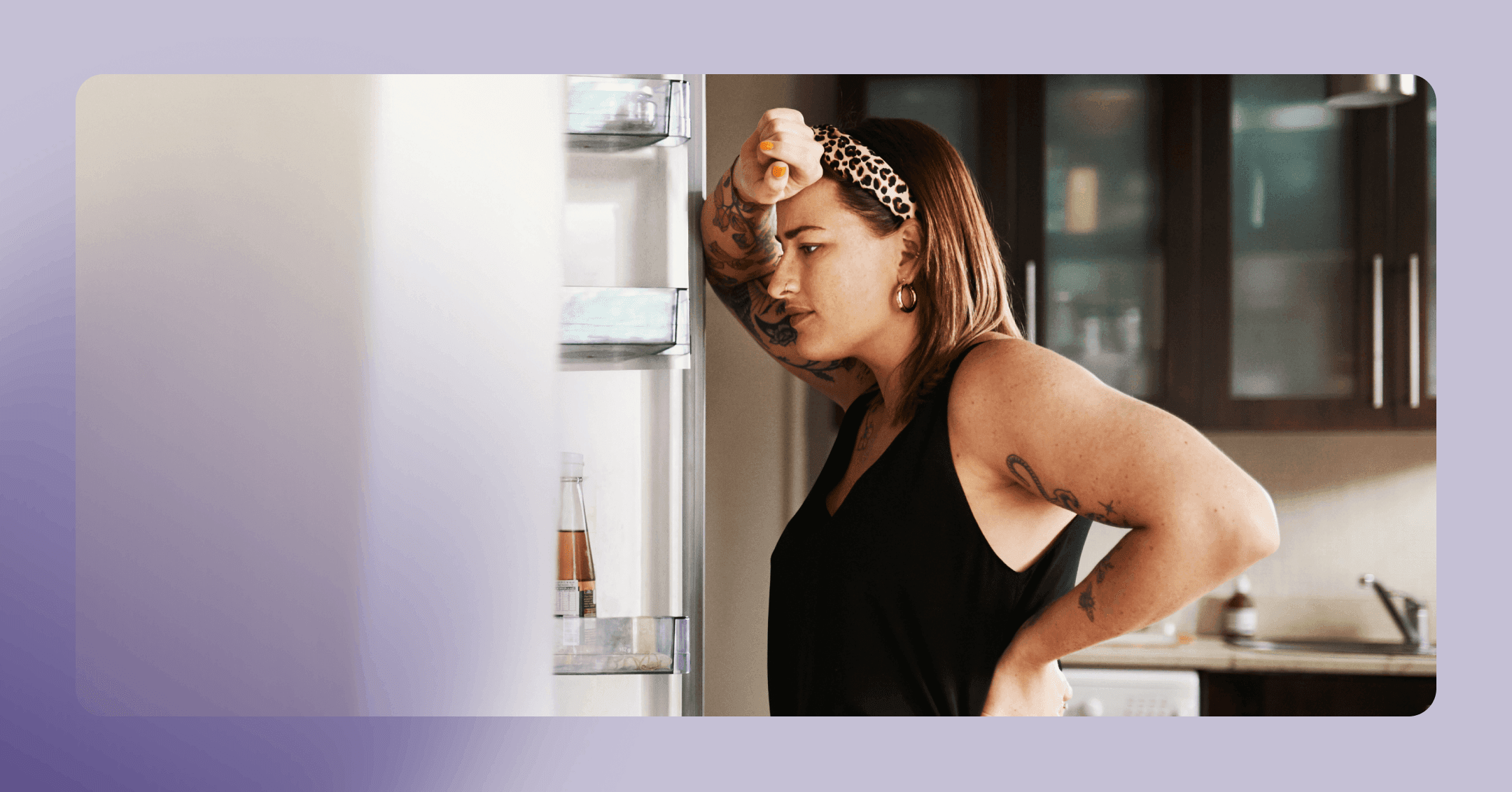
Food addiction isn't an official medical diagnosis, but it's a real concern for many people.
If you feel addicted to food, you might have an intense fixation on certain foods or find it difficult to control your eating.
With the right coping strategies and support, you can learn to create a more balanced relationship with food.
Addiction involves an extreme focus or desire for something despite potential consequences. It’s often associated with behaviors like substance use and gambling, but compulsive eating can feel just as distressing. And while food addiction isn’t an official condition in the Diagnostic and Statistical Manual of Mental Disorders (DSM), experiencing intense cravings and uncontrollable eating may be more common than you think.
According to some data, up to 20% of the general population feel like they’re addicted to food [1]. This often involves foods that are high in salt, refined sugar, and unhealthy fats. Learning more about what causes habitual overeating may help you recognize your triggers and develop a healthier relationship with food.
Signs of an unhealthy relationship with food
Food addiction isn’t an official disorder, but it does involve clinical components of several mental health conditions [1]. As you might expect, food addiction shares similarities with eating disorders like bulimia nervosa and binge eating disorder (BED). Like these eating disorders, food addiction can make it feel like you can’t control your eating habits and behaviors.
Food addiction also shares similarities with substance use disorders like alcohol use disorder (AUD). You may crave certain foods despite knowing that the type or amount of food is considered unhealthy. Additionally, you might experience intrusive thoughts about food or eat without considering the consequences.
Without diagnostic criteria, it can be hard to identify food addiction. However, here are some potential signs of an unhealthy relationship with food:
You’re fixated on food.
You eat until the point of feeling sick.
You ignore your body’s natural cues for feeling hungry or full.
You feel guilty about what or how much you eat.
You go out of your way to find certain foods that you want to eat.
You have a strict list of food rules, like avoiding or limiting certain types of food.
You’re concerned that other people will judge your food choices.
The care you need, when you need it
Learn how Rula can support your mental health journey
Why you might feel addicted to food
Feeling like you're addicted to food can be a sign of an eating disorder or disordered eating. If you have a habit of overeating or find it difficult to stop thinking about food, it may be a symptom of an underlying health concern like BED.
Certain foods may also increase your risk of experiencing that feeling of addiction. Processed foods high in sugar and unhealthy fats can trigger the release of dopamine [2], a neurotransmitter that helps control motivation and reward. You may begin to crave certain foods or have trouble regulating how much you eat to feel satisfied.
Other risk factors for overeating include:
Having a personal or family history of substance misuse [3]
Identifying as female, overweight, and are older than 35 [4]
Having a history of food insecurity [5]
Having a history of dieting, intermittent fasting, or other restrictive eating habits
The problem with habitual overeating
Research shows a clear link between food and mental well-being. While a healthy and balanced diet can improve your mental health, consistent overeating may do just the opposite. For example, processed foods have been shown to increase your risk for depression [6].
Food addiction can also impact your body image and the way you see yourself. Negative body image is associated with low self-esteem, social isolation, and a reduced quality of life [7]. You may have trouble focusing at work or school or experience mood swings driven by food fixations or irregular eating patterns.
Overeating can also take a physical toll on the body, leading to stomach pains, sleep problems, and unhealthy weight gain.
How to overcome food addiction
Food addiction can evoke difficult emotions, including guilt, shame, and overwhelm. While you may be tempted to keep your habits to yourself, you don’t need to navigate this on your own. Seeking support can be an important step in changing your relationship with food and your body.
Nutritional counseling helps people become more mindful about what and when they eat. With the support of a nutritionist or dietitian, you can learn to reframe food beliefs, recognize hunger and fullness cues, and eat a more balanced diet.
Talk therapy can also help you understand the thoughts and beliefs driving your behavior. Working with a therapist is a chance to manage difficult emotions and behavior patterns. In time, this can help you end the toxic cycle of cravings, overeating, and restrictions.
Other tips for creating a more balanced relationship with food include:
Listening to your body: Understanding the connection between your body and mind can help with food addiction. The next time you feel an urge, ask yourself, “Am I physically hungry? Am I emotionally triggered? Is it a combination of the two?”
Developing different coping tools: Food isn't a sustainable solution for coping with stress and other difficult emotions. If you use food to deal with life’s challenges, consider healthier coping mechanisms. You might try deep breathing exercises, calling a friend, or taking a walk around the block.
Connecting with others: Food addiction can feel isolating, but plenty of people share similar struggles. Look for a local or online program to connect with others who want to create healthier habits.
When someone says they feel ‘addicted’ to food, I help them explore what that word means for them. For some, it reflects restriction or unmet needs, and for others it can point to compulsive or disordered eating patterns — either way, support and effective treatment are available.

Brandy Chalmers, LPC
Clinical reviewer
Find care with Rula
If you’re struggling with your relationship with food, know that you’re not alone. Many people find it difficult to control their eating, which can take a mental, emotional, and physical toll. While food addiction isn’t an official condition, professional support can help you manage cravings and other eating behaviors.
At Rula, we’re here to help you feel better. Rula makes it easy to find a licensed therapist or psychiatric provider who takes your insurance. That way, you don’t have to choose between great care and a price you can afford.
Rula patients pay about $15 per session with insurance, and 93% say they feel better after getting care through Rula. We have 21,000+ providers, and appointments are available as soon as tomorrow. We’re here to help you take the next step — wherever you are in your mental health journey.
References
- Current Status of Evidence for a New Diagnosis: Food Addiction-A Literature Review https://pmc.ncbi.nlm.nih.gov/articles/PMC8784968/
- Food Addiction: Implications for the Diagnosis and Treatment of Overeating https://pmc.ncbi.nlm.nih.gov/articles/PMC6770567/#sec2-nutrients-11-02086
- Co–Occurrence of Food Addiction, Obesity, Problematic Substance Use, and Parental History of Problematic Alcohol Use https://pmc.ncbi.nlm.nih.gov/articles/PMC10986778/
- The Prevalence of Food Addiction as Assessed by the Yale Food Addiction Scale: A Systematic Review https://www.mdpi.com/2072-6643/6/10/4552
- Food Insecurity and Food Addiction in a Large, National Sample of Lower-Income Adults https://www.sciencedirect.com/science/article/pii/S2475299123266202
- Consumption of Ultraprocessed Food and Risk of Depression https://jamanetwork.com/journals/jamanetworkopen/fullarticle/2809727
- Does Body Image Affect Quality of Life?: A Population Based Study https://journals.plos.org/plosone/article?id=10.1371/journal.pone.0163290

Alex Bachert
Alex Bachert is a freelance copywriter and mental health advocate. Since earning her masters degree in public health, she has focused her career on creating informative content that empowers people to prioritize their health and well-being. Alex has partnered with organizations like Ro, WellTheory, and Firsthand, and her work has been recognized by the Digital Health Association.
When she’s not writing about mental health, Alex is usually playing pickleball, meeting with her local board of health, or enjoying time with her three kids.

Brandy Chalmers, LPC
Having faced challenges like childhood abuse, neglect, and the loss of her father to suicide, Brandy Chalmers is deeply passionate about providing compassionate care. She is a Licensed Professional Counselor, Nationally Certified Counselor, and Registered Play Therapist with a Master’s Degree in Clinical Counseling and Marriage and Family Therapy.
Brandy also teaches at a university, sharing her expertise with future mental health professionals. With over a decade of experience in settings like inpatient care and private practice, she specializes in helping clients with perfectionism, trauma, personality disorders, eating disorders, and life changes.
Rula’s editorial process
Rula’s editorial team is on a mission to make science-backed mental health insights accessible and practical for every person seeking to better understand or improve mental wellness.
Members of Rula’s clinical leadership team and other expert providers contribute to all published content, offering guidance on themes and insights based on their firsthand experience in the field. Every piece of content is thoroughly reviewed by a clinician before publishing.