
Narrative therapy is a type of therapy that encourages people to separate their identity from their problems.
Narrative therapy uses various techniques to empower people to rewrite their life story. The main techniques are externalization, deconstruction, re-authoring, and unique outcomes.
Narrative therapy is effective for managing depression, anxiety, relationship issues, and life transitions, but it may not be right for everyone.
Throughout our lives, we tell ourselves stories about who we think we are. These stories can motivate and inspire us, but they can also leave us feeling broken, powerless, and focused on our problems. Over time, that type of negative narrative can affect your self-esteem, well-being, and ability to connect with others.
What if there was a way to rewrite your story? Narrative therapy can’t erase the past, but it can help you challenge assumptions you’ve made about yourself and discover new opportunities for growth and purpose.
What is narrative therapy?
Narrative therapy is a type of talk therapy that empowers people to rewrite their life stories. Narrative therapy encourages people to separate their identities from their problems. This allows them to create space to cope with their problems and improve their well-being.
Founded by two therapists in the 1980s, narrative therapy focuses on three leading concepts: respect, non-blaming, and seeing the client as the expert.
Respect: Narrative therapy is a respectful, non-judgemental form of treatment that supports people as they identify issues they’d like to address in their lives.
Non-blaming: As people review their life narratives, their provider encourages them to avoid blaming anyone or anything for past experiences and assumptions.
Client as the expert: Narrative therapy focuses on client empowerment. You’ll work closely with your therapist to learn how to grow and heal, but you’re in charge of changing your narrative.
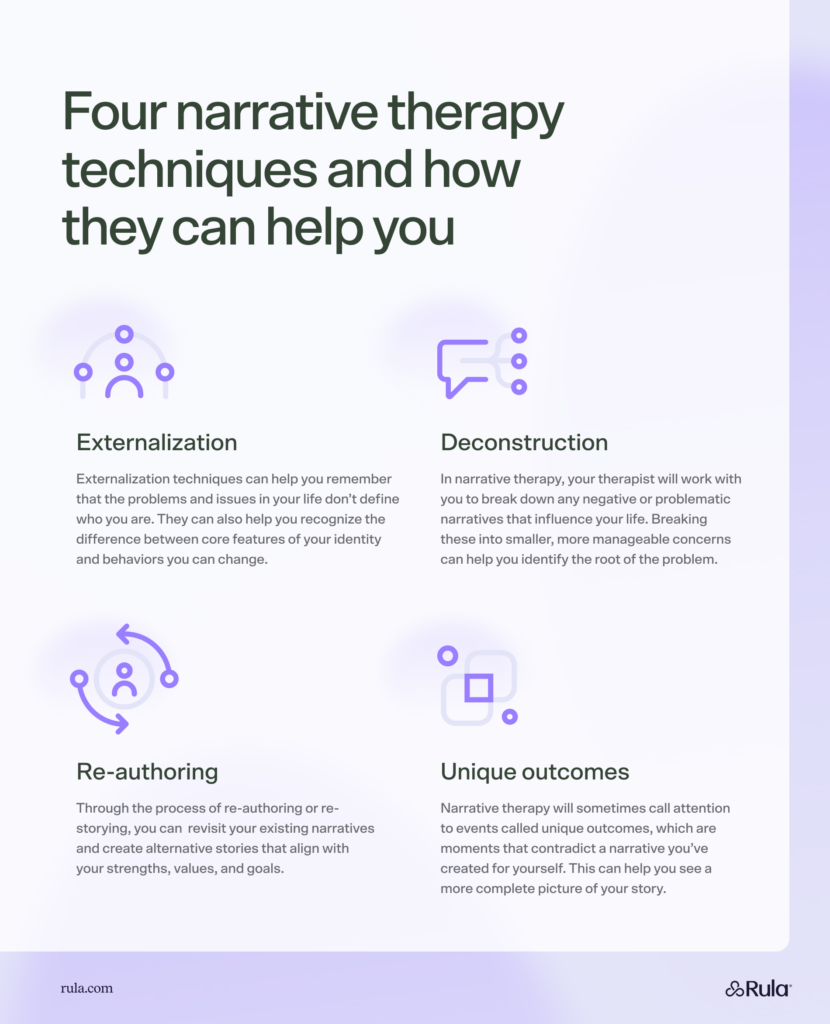
How narrative therapy works in four steps
Narrative therapy helps you look at your life story in a new way. Instead of seeing yourself as the problem, you learn to view challenges as separate from who you are.
Here’s how the process usually works:
1. Externalization
You start by separating your identity from your problems. This helps you see that your challenges don’t define you.
Example: Instead of saying something like, “I’m anxious,” you might say, “Anxiety shows up for me sometimes.” This shift makes it easier to focus on what you can change, not who you are.
2. Deconstruction
Next, you and your therapist break down big, stressful stories into smaller pieces. This helps you find where the problem started and what’s keeping it going.
Example: If you believe negative thoughts like, “I always fail at work,” your therapist might help you explore that thought and its root cause. It could come from early criticism or perfectionism rather than the truth.
3. Re-authoring
Once you understand the story you’ve been telling yourself, you start to rewrite it in a way that supports growth and healing.
Example: Instead of thinking something like, “I’m bad at relationships,” you might reframe it as, “I’m learning what healthy love looks like.” This helps you see strength and progress where you once saw weakness.
4. Unique outcomes
Finally, you look for moments that don’t fit your old story — small wins or positive exceptions you might have overlooked.
Example: Maybe you think you “always lose control,” but try to remember a time when you stayed calm in a tough situation. Those moments help you see that change is already happening.
Find your match
Take the first step toward better mental health.
What can narrative therapy help treat?
Narrative therapy can help people who have trouble managing negative emotions, feelings, or thoughts about themselves. It’s an effective treatment for many mental and behavioral health conditions, like anxiety, depression, and post-traumatic stress disorder (PTSD). It can also help you cope with grief and trauma.
Research shows that narrative therapy can help people with depression focus on positive experiences and develop kinder stories about themselves. Another study found that narrative therapy effectively reduced levels of depression and anxiety in people with substance use issues.
In addition to individual therapy, providers use narrative therapy in couples and family therapy sessions to help address relationship issues and life transitions. It can be an effective tool for increasing marital satisfaction among women. It can also help reduce family conflict between parents and their children.
The benefits and limitations of narrative therapy
As you learn more about narrative therapy, you may be wondering if this type of treatment is right for you. Understanding the leading benefits and potential challenges can help you have a more informed conversation with your therapist about the right care for you.
The care you need, when you need it
Learn how Rula can support your mental health journey
Narrative therapy benefits
Narrative therapy is a client-centered method that encourages you to find your voice and take control of your life stories. It highlights people’s strengths and skills and is flexible enough to meet each person’s needs, preferences, and cultural backgrounds. While therapy can sometimes make people feel vulnerable, narrative therapy was designed to empower people as they heal and grow.
Narrative therapy challenges
Although narrative therapy can be effective for certain mental health conditions and life challenges, it may not be an appropriate form of care for some serious mental health conditions. This includes bipolar disorder and schizophrenia.
Another factor to consider is that narrative therapy can be a time-consuming process. For this reason, it may not be the best fit for someone who is looking for a more structured, solutions-based approach to care.
Narrative therapy can help you see that you’re not your problems. You’re the author of your story, and it’s never too late to write a new chapter.

Brandy Chalmers, LPC
Clinical reviewer
Find care with Rula
If you’re having difficulty separating who you are from what you've been through, narrative therapy can help. Narrative therapy can empower you to identify your strengths and challenge negative assumptions you’ve made about yourself. While it’s not suited for some more serious mental health conditions, it can be a powerful tool for people looking to heal and grow.
At Rula, we’re here to help you feel better. Rula makes it easy to find a licensed therapist or psychiatric provider who takes your insurance. That way, you don’t have to choose between great care and a price you can afford.
Rula patients pay about $15 per session with insurance, and 93% say they feel better after getting care through Rula. We have 21,000+ providers, and appointments are available as soon as tomorrow. We’re here to help you take the next step — wherever you are in your mental health journey.
Find narrative therapy near you
New York – Texas – California – Georgia – Illinois – Hawaii – Indiana – Virginia – North Carolina – Pennsylvania – Find your city

Alex Bachert
Alex Bachert is a freelance copywriter and mental health advocate. Since earning her masters degree in public health, she has focused her career on creating informative content that empowers people to prioritize their health and well-being. Alex has partnered with organizations like Ro, WellTheory, and Firsthand, and her work has been recognized by the Digital Health Association.
When she’s not writing about mental health, Alex is usually playing pickleball, meeting with her local board of health, or enjoying time with her three kids.

Adrienne Duhon, LCSW
Adrienne has worked in the mental health field for over 10 years across a variety of settings including hospitals, nursing homes, and telehealth. In her current role as a Clinical Quality Specialist at Rula, she supports therapists by providing clinical guidance, documentation support, and peer consultation, with a focus on improving quality of care. She is trained in CBT and specializes in working with people experiencing anxiety, depression, and ADHD.
Adrienne is passionate about mental health because she believes everyone deserves access to compassionate, evidence-based care that helps them thrive and feel supported. Outside of work, she enjoys spending time with her family and taking long walks with her dog.
Rula’s editorial process
Rula’s editorial team is on a mission to make science-backed mental health insights accessible and practical for every person seeking to better understand or improve mental wellness.
Members of Rula’s clinical leadership team and other expert providers contribute to all published content, offering guidance on themes and insights based on their firsthand experience in the field. Every piece of content is thoroughly reviewed by a clinician before publishing.